7-Day Rongai Route Climb
Mountain Trekking · Trip EA-3516

7-Day Rongai Route Climb

Duration7days
Levelchallenging
Scroll

Last updated:

Safari Overview

Your Journey

The Rongai Route, 7 days on the mountain, comes at Kilimanjaro from the north near the Kenyan border, on the drier and quieter side. It suits climbers who like a steady rhythm and fewer people on the trail, and anyone hoping to see some wildlife on the lower slopes. You need good fitness but no technical skills. Because you come down the southern side on the Marangu trail, you see both faces of the mountain.

Day one starts at Rongai Gate (1950m) and crosses farmland before entering pine and cypress forest, where colobus monkeys and bushbuck are sometimes seen, on the way to Simba Camp. Day two climbs through moorland past First Cave to Second Cave at 3450m. Day three is kept short on purpose, a walk to Kikelewa Cave to help you acclimatise. Day four is steeper, up to Mawenzi Tarn at 4330m. It's a camp beside a small tarn under the Mawenzi spires, and one of the most scenic on the mountain.

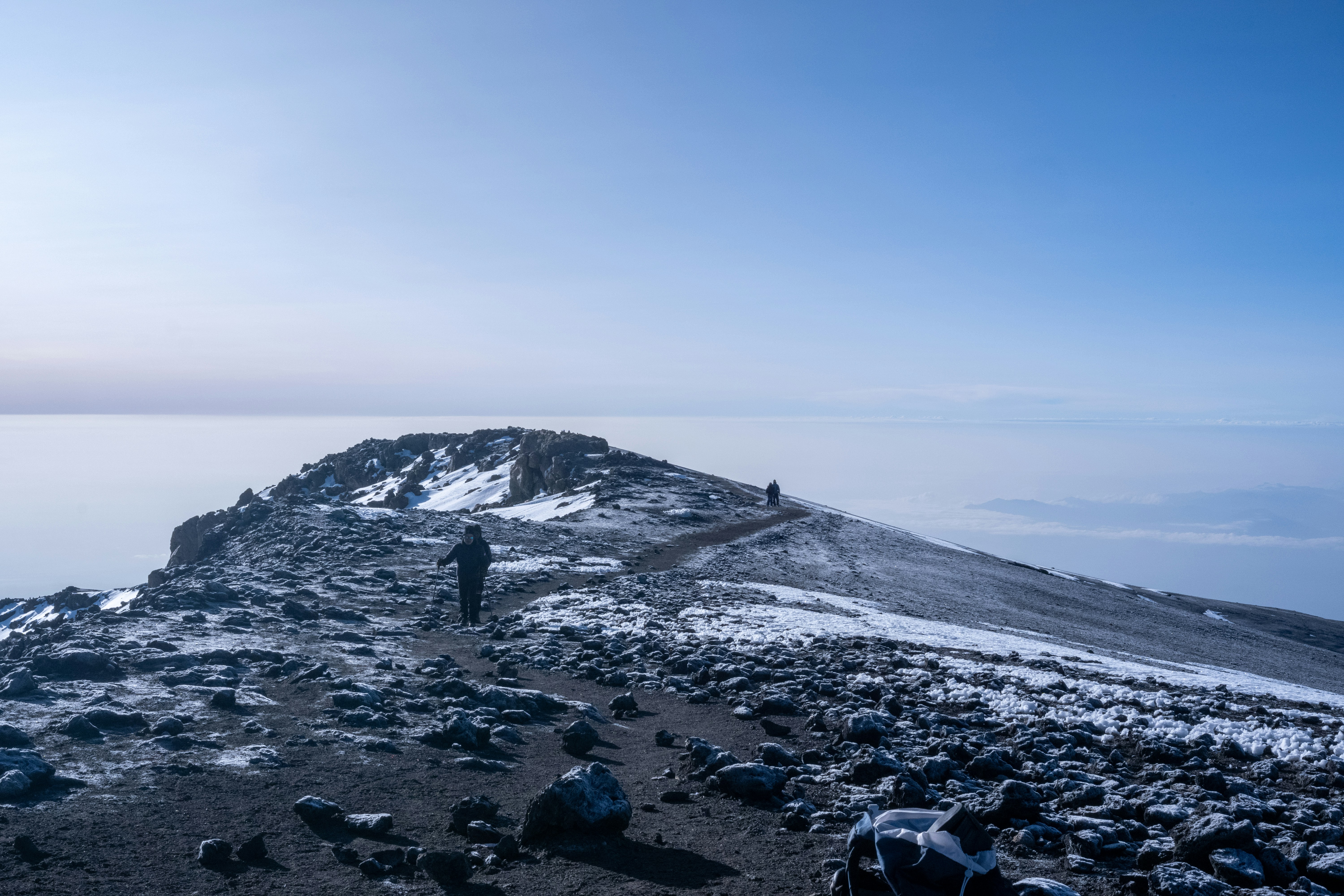
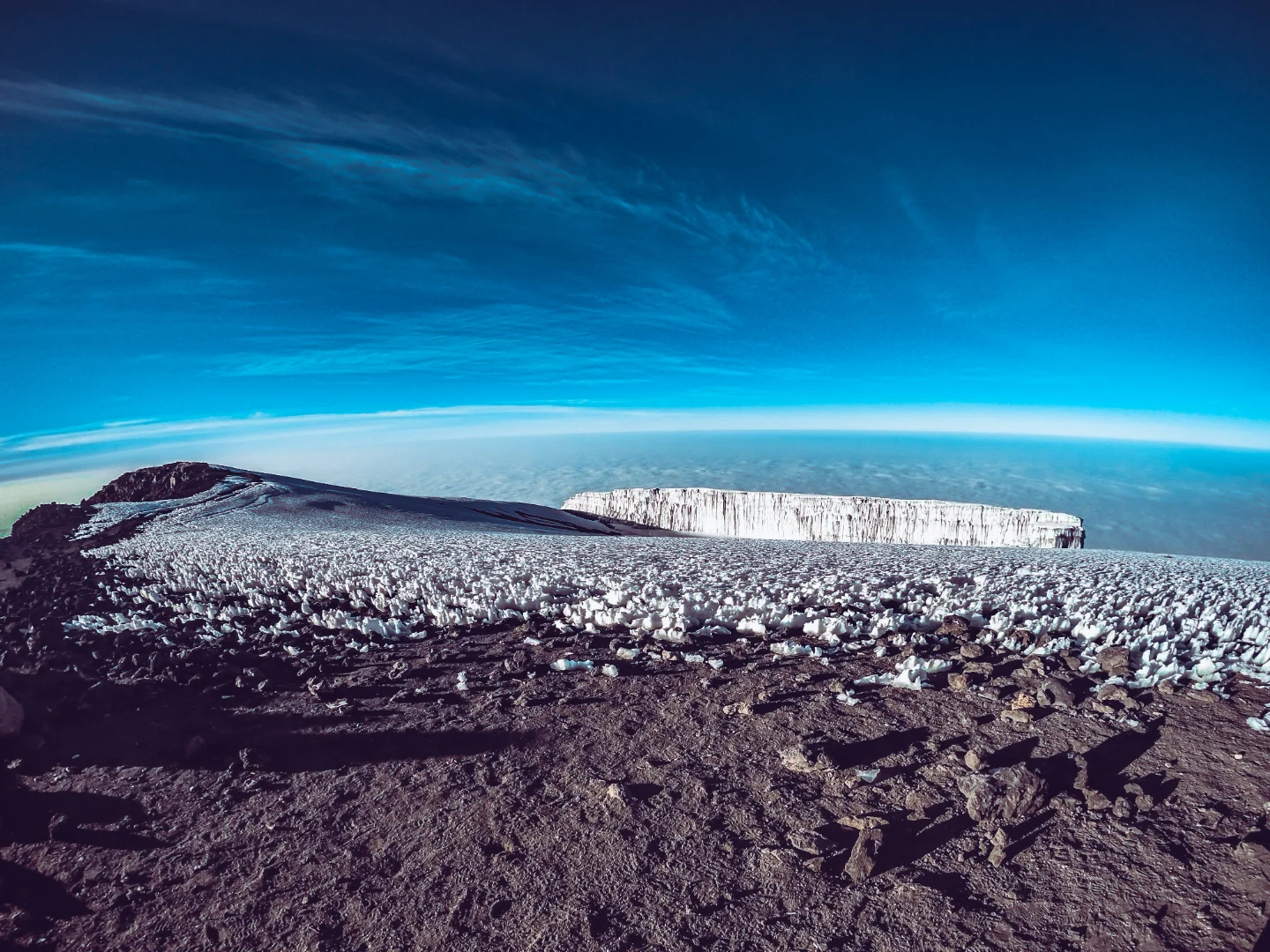
Day five crosses the high desert of the Saddle to School Hut at 4750m. You set off around midnight for Gilman's Point on the crater rim, then follow the rim to Uhuru Peak at 5895m for sunrise before descending to Horombo Hut. The last day walks down through moorland and rainforest to Marangu Gate. Our Arusha team can help with fitness, kit and choosing dates.
Share This Safari
Safari Highlights
  • Quiet northern approach close to the Kenyan border
  • Colobus monkeys and bushbuck possible in the lower forest
  • Camp beside the tarn under Mawenzi's spires
  • Crossing the Saddle's high desert to School Hut
  • Sunrise at Uhuru Peak via Gilman's Point
  • Descent on the Marangu trail, seeing both sides
7-Day Rongai Route Climb Safari Overview
Featured7-Day Rongai Route Climb

Comparing routes? Read our Rongai Route guide for the altitude profile, summit success rate and a day-by-day breakdown of the route.

Day-by-Day Itinerary

Your Safari Unfolds

Your 7-day adventure across Africa's most spectacular wilderness areas

1
Day 1

Rongai Gate (1950m) to Simba Camp (2625m)

The Rongai Route starts on the quieter north side of Kilimanjaro, close to the Kenyan border. From Rongai Gate at 1950m the trail crosses cultivated farmland before entering pine and cypress forest. The walking is gentle, and it's worth keeping your camera ready, as colobus monkeys and bushbuck are possible in the trees. Simba Camp, at 2625m, makes a peaceful first night, with views north toward Kenya. Meals: lunch and dinner.

Meals:Lunch, Dinner
North side approach near Kenya borderPine and cypress forestColobus monkeys and bushbuckViews toward Kenya
2
Day 2

Simba Camp (2625m) to Second Cave (3450m)

The forest thins as you climb into moorland dotted with heather and wildflowers. Partway up you pass First Cave, a shallow overhang once used as a shelter, then carry on to camp at Second Cave, 3450m. The north side of Kilimanjaro gets less rain than the south, and you notice it here: the country is drier and more open than on the southern routes. The gradient stays steady all day. Meals: breakfast, lunch and dinner.

Meals:Breakfast, Lunch, Dinner
Moorland with wildflowersFirst Cave landmarkSecond Cave campDrier north-side climate
3
Day 3

Second Cave (3450m) to Kikelewa Cave (3600m)

A shorter day, kept short on purpose to give your body time to acclimatise. The trail crosses rocky ground where the vegetation thins out, winding between volcanic boulders and stunted shrubs. Mawenzi's jagged spires grow larger ahead of you as you go. Camp is Kikelewa Cave at 3600m, set beneath a rocky overhang. Use the spare time to rest, eat well and drink plenty of water. Meals: breakfast, lunch and dinner.

Meals:Breakfast, Lunch, Dinner
Rocky volcanic terrainMawenzi Peak viewsKikelewa Cave campAcclimatization day
4
Day 4

Kikelewa Cave (3600m) to Mawenzi Tarn (4330m)

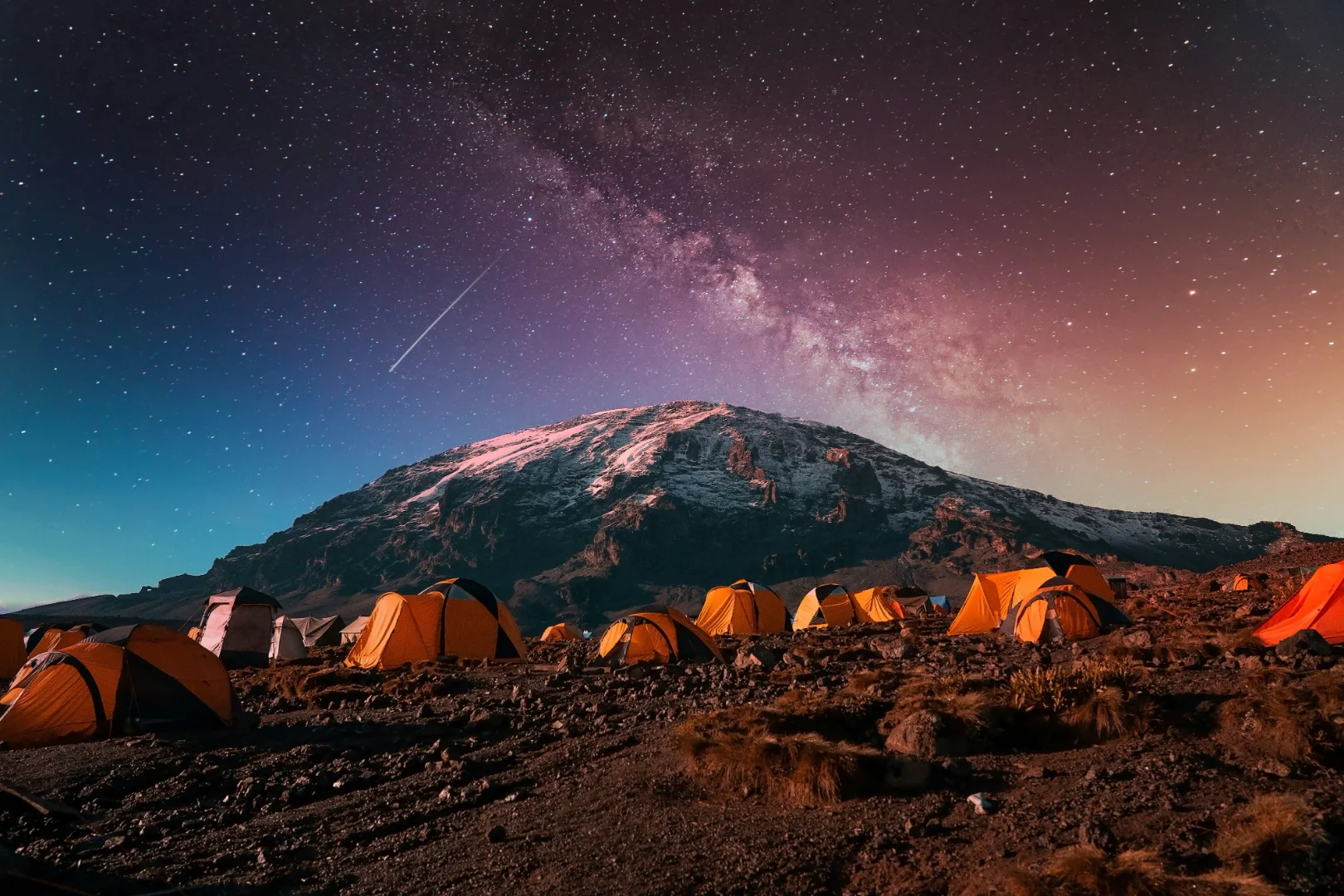
The trail steepens as you climb toward the base of Mawenzi Peak, Kilimanjaro's rugged second summit. The landscape turns stark, with towering rock pinnacles and deep gullies carved by ancient glaciers. Camp at Mawenzi Tarn, 4330m, sits beside a small alpine tarn under Mawenzi's spires, and it's one of the most scenic campsites on the mountain. Have a warm layer ready for the evening, because you're now well above the moorland. Meals: breakfast, lunch and dinner.

Meals:Breakfast, Lunch, Dinner
Steep ascent to Mawenzi baseMawenzi Tarn — alpine lakeDramatic rock pinnaclesOne of Kili's most scenic camps
5
Day 5

Mawenzi Tarn (4330m) to School Hut (4750m)

Today you cross the Saddle, the high-altitude desert plateau linking Mawenzi and Kibo. It's barren volcanic gravel with almost no plant life, and it looks more like a moonscape than a mountainside. Walk slowly and keep drinking. School Hut, at 4750m, sits at the base of the Kibo summit cone and is the launch point for your summit attempt, so the evening is for an early meal and as much sleep as you can get before the midnight start. Meals: breakfast, lunch and dinner.

Meals:Breakfast, Lunch, Dinner
The Saddle — lunar landscape crossingBarren volcanic gravel desertSchool Hut base campSummit cone views
6
Day 6

School Hut (4750m) to Uhuru Peak (5895m) to Horombo Hut (3720m)

You set off around midnight, climbing steep scree by headlamp in sub-zero temperatures toward the crater rim. The first milestone is Gilman's Point on the rim. From there you traverse the rim to Uhuru Peak at 5895m, where sunrise lights up the crater and the glaciers. After time at the summit you descend the Marangu route to Horombo Hut at 3720m for the night. It's a long, hard day, and you'll sleep well. Meals: breakfast, lunch and dinner.

Meals:Breakfast, Lunch, Dinner
Midnight summit pushGilman's Point crater rimUhuru Peak (5895m) — Roof of AfricaCrater and glacier sunriseDescent via Marangu route
7
Day 7

Horombo Hut (3720m) to Marangu Gate (1860m)

The final descent follows the Marangu route down through moorland and back into the rainforest, where the air feels warm and thick after the summit. The pace is relaxed and the mood is usually celebratory. At Marangu Gate, 1860m, you collect your summit certificate and say goodbye to your crew. Coming down the south side means that over seven days you've seen both faces of Kilimanjaro. Meals: breakfast and lunch.

Meals:Breakfast, Lunch
Moorland and rainforest descentSummit certificate at Marangu GateCrew farewellTransfer to hotel
Safari Route Map

Route map unavailable

Contact us for detailed route information

Plan Your Safari

Dates & Pricing

Tailored quote

Designed around your journey

Tell us your dates and group size and our safari specialist will prepare a personal quote.

Departure

Contact us to discuss the best available travel dates for this safari.

What's Included

Your Safari Package

Complete Safari Package
  • Expert wilderness guides
  • Quality camping equipment
  • All meals and beverages
  • Park entrance fees
  • Cultural village visit
  • Emergency support
  • Wildlife spotting opportunities
Not Included
  • International airfare
  • Travel insurance
  • Personal mountaineering equipment
  • Staff gratuities
  • Visa and permits
  • Personal purchases

We'll always tell you exactly what your safari covers before you pay. Need help with flights, visas, or insurance? Just ask — we arrange it all.

Safari Value Summary
Total Inclusions
7 Items
Meals Included
18 Meals
Accommodation
6 Nights
Game Drives
10+ Drives
Safari Days
7 Days
All-Inclusive Experience

Our safari package includes everything you need for an unforgettable adventure. No hidden costs or surprise charges.

Prefer it tailor-made? Design your safari
Independent Reviews

What Travellers Say About Us

Reviews of our safaris on independent platforms, from guests who travelled with our Arusha team.

Good to Know

7-Day Rongai Route Climb: Frequently Asked Questions

What makes the Rongai Route different from other Kilimanjaro routes?

Rongai approaches Kilimanjaro from the north, near the Kenyan border, on the drier and quieter side of the mountain. It has a steady gradient, fewer climbers and a chance of wildlife such as colobus monkeys and bushbuck in the lower forest. You come down the southern side on the Marangu trail, so you see both faces of the mountain.

How does acclimatisation work on the 7-day Rongai Route?

The ascent is gradual. You climb from Rongai Gate at 1950m to Simba Camp at 2625m, then Second Cave at 3450m. Day three is a deliberately short walk to Kikelewa Cave at 3600m, before a steeper day to Mawenzi Tarn at 4330m and then School Hut at 4750m. That steady rise gives your body time to adjust before summit night.

What is summit night like on the Rongai Route?

You leave School Hut at 4750m around midnight and climb steep scree by headlamp in sub-zero temperatures to Gilman's Point on the crater rim. From there you follow the rim to Uhuru Peak at 5895m for sunrise over the crater and glaciers. Then you descend the Marangu route to Horombo Hut at 3720m for the night.

What are the camps on the Rongai Route?

You sleep at Simba Camp (2625m), Second Cave (3450m), Kikelewa Cave (3600m), Mawenzi Tarn (4330m) and School Hut (4750m), then Horombo Hut (3720m) after the summit. Mawenzi Tarn is the one people remember: a camp beside a small tarn under the Mawenzi spires, and one of the most scenic on the mountain.

Where does the Rongai climb start and finish?

The climb starts at Rongai Gate (1950m) on the northern side of Kilimanjaro and finishes at Marangu Gate (1860m) on the southern side, where you collect your certificate. Most climbers fly into Kilimanjaro International Airport, and our Arusha team arranges the transfers to the start and back from the finish.

When is the best time to climb Kilimanjaro on the Rongai Route?

The north side of Kilimanjaro gets less rain than the southern slopes, which makes Rongai a good choice when rain is a worry. The drier months are the most popular for any route. There are no fixed departure dates listed, so ask us for dates and we'll help you choose a window that suits you.

Is the Rongai Route good for beginners?

It suits fit first-time climbers who want a quieter, steady route, as it needs no technical skills. It's still a high-altitude climb and summit night is hard, so good fitness and regular training walks beforehand matter. Our Arusha team can help with fitness advice, kit and choosing dates.

What should I pack for climbing Kilimanjaro via Rongai?

Pack for everything from warm forest to a sub-zero summit night: thermal base layers, a fleece, an insulated jacket, a waterproof shell, warm gloves, a hat and a headlamp with spare batteries. Broken-in boots, trekking poles and a warm sleeping bag are important. Personal mountaineering equipment is your responsibility, and we can advise on hire.

How long is the 7-Day Rongai Route Climb?

The 7-Day Rongai Route Climb is 7 days and 6 nights. The day-by-day itinerary on this page shows where you go and stay each day.

Which parks and places does the 7-Day Rongai Route Climb visit?

This trip visits Mount Kilimanjaro.

How difficult is the 7-Day Rongai Route Climb?

It is rated challenging: good fitness is recommended.

What is the group size on the 7-Day Rongai Route Climb?

It runs for groups of 2 to 12 travellers.

What is included in the 7-Day Rongai Route Climb?

Included: Expert wilderness guides, Quality camping equipment, All meals and beverages, Park entrance fees, Cultural village visit, Emergency support and Wildlife spotting opportunities.

What is not included in the 7-Day Rongai Route Climb?

Not included: International airfare, Travel insurance, Personal mountaineering equipment, Staff gratuities, Visa and permits and Personal purchases.

Your safari is waiting

Join thousands of travelers who have experienced the magic of Africa's wildlife with us.