6-Day Marangu Route Climb
Mountain Trekking · Trip EA-ACA9

6-Day Marangu Route Climb

Duration6days
Levelmoderate
Scroll

Last updated:

Safari Overview

Your Journey

Marangu is Kilimanjaro's oldest path and the only route where you sleep in huts rather than tents. We run the Marangu Route, 6 days instead of five, and the extra day at Horombo is deliberate. The standard five-day climb goes up too fast for many people, and the added acclimatisation gives you a fairer chance at Uhuru Peak (5895m). It suits climbers who'd rather have a bunk and a dining hall than a tent. It isn't an easy option, though. You need good fitness, but no technical skills.

You start at Marangu Gate (1860m) and climb through rainforest, where blue monkeys are often seen, to the A-frame cabins of Mandara Hut. Day two leaves the forest for open moorland and Horombo Hut at 3720m, with Mawenzi ahead. Day three stays at Horombo, with an optional walk up to Zebra Rocks at about 4000m. Day four crosses the bare Saddle to Kibo Hut at 4703m for an early night. The summit attempt starts around midnight, passes Gilman's Point on the crater rim on the way to Uhuru Peak, then descends all the way to Horombo. The last day walks down to Marangu Gate for your certificate.

Because you come down the way you went up, you'll see much of the route twice. If scenic variety matters most to you, Lemosho may suit you better. Hut accommodation, all meals, professional guides and park fees are included, and our Arusha team can advise on fitness, kit and dates.

Share This Safari
Safari Highlights
  • Hut nights instead of tents all the way up
  • Rainforest with blue monkeys on day one
  • Extra acclimatisation day at Horombo with a Zebra Rocks walk
  • Crossing the Saddle between Mawenzi and Kibo
  • Summit via Gilman's Point to Uhuru Peak (5895m)
6-Day Marangu Route Climb Safari Overview
Featured6-Day Marangu Route Climb

Comparing routes? Read our Marangu Route guide for the altitude profile, summit success rate and a day-by-day breakdown of the route.

Day-by-Day Itinerary

Your Safari Unfolds

Your 6-day adventure across Africa's most spectacular wilderness areas

1
Day 1

Marangu Gate (1860m) to Mandara Hut (2720m)

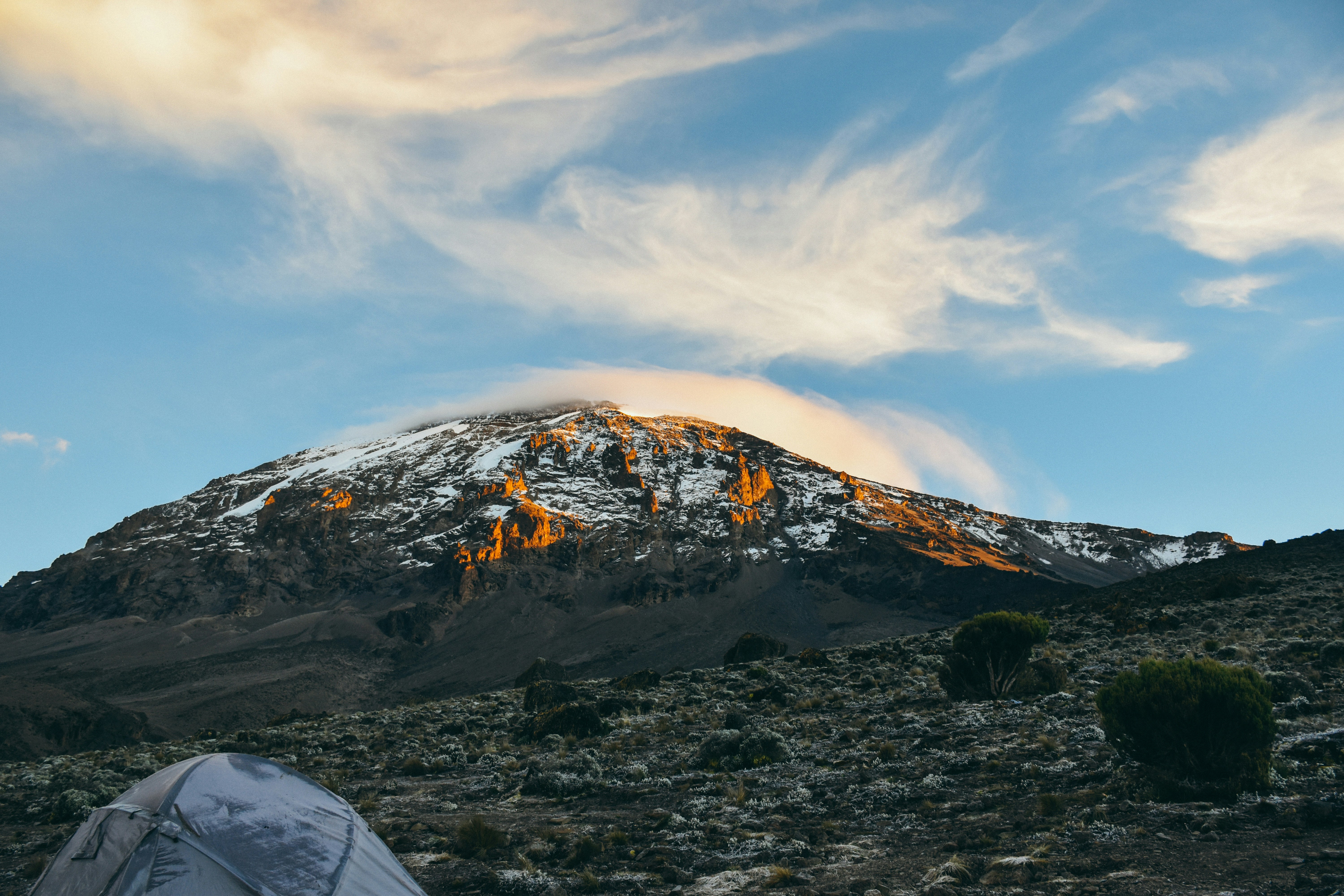
After registering at Marangu Gate you walk into dense rainforest, with tall fig trees, ferns and the sound of running water. The path is well maintained and climbs gradually. Keep an eye on the canopy, where blue monkeys and a variety of birds are often seen. If there's time and energy, your guide can add the optional detour to Maundi Crater. Mandara Hut, at 2720m, is a group of A-frame wooden cabins, and Marangu is the only Kilimanjaro route with huts all the way up. Night: Mandara Hut. Meals: lunch and dinner.

Meals:Lunch, Dinner
Marangu Gate registrationDense rainforest trailBlue monkeys and tropical birdsMandara Hut — A-frame cabinsOptional Maundi Crater detour
2
Day 2

Mandara Hut (2720m) to Horombo Hut (3720m)

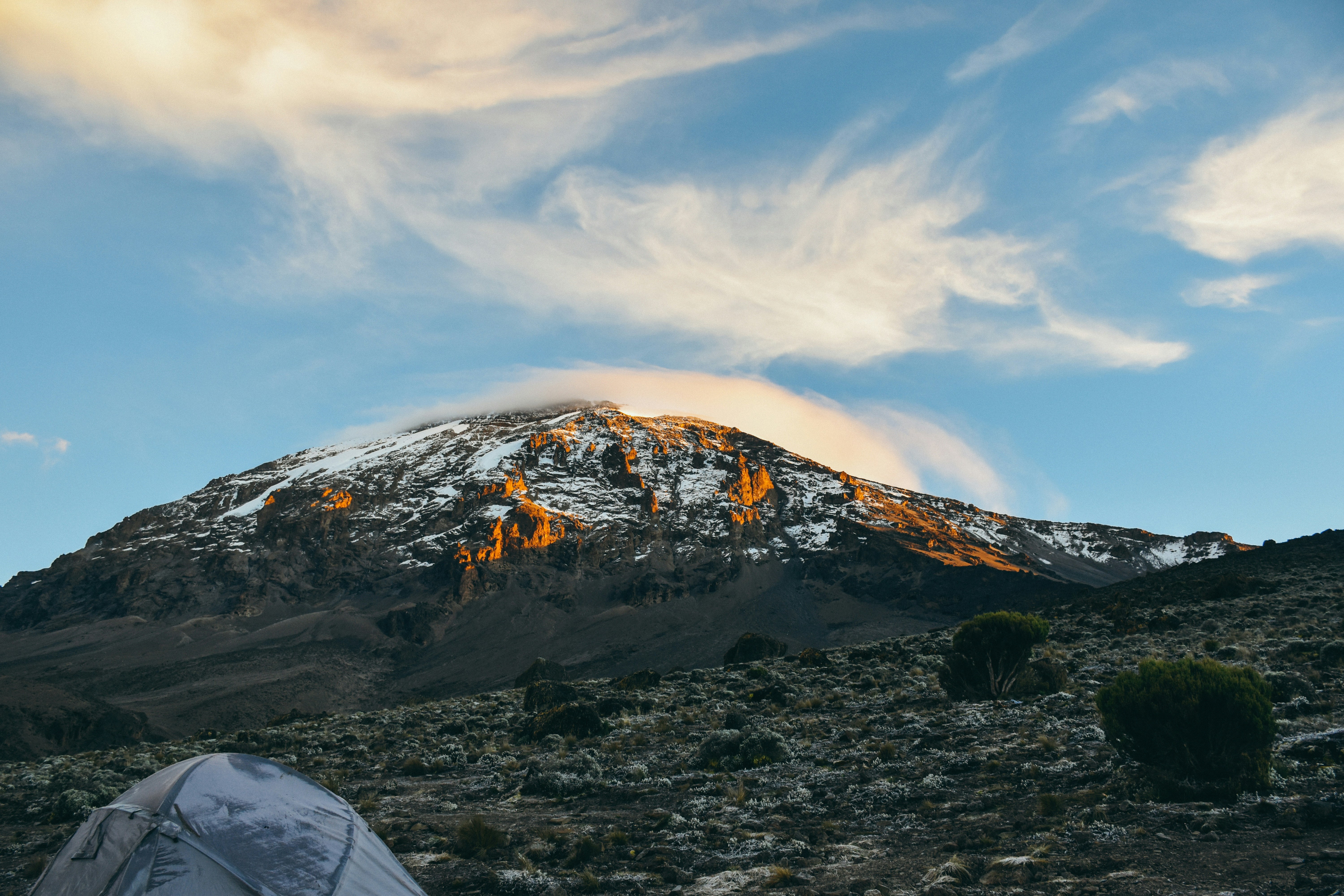
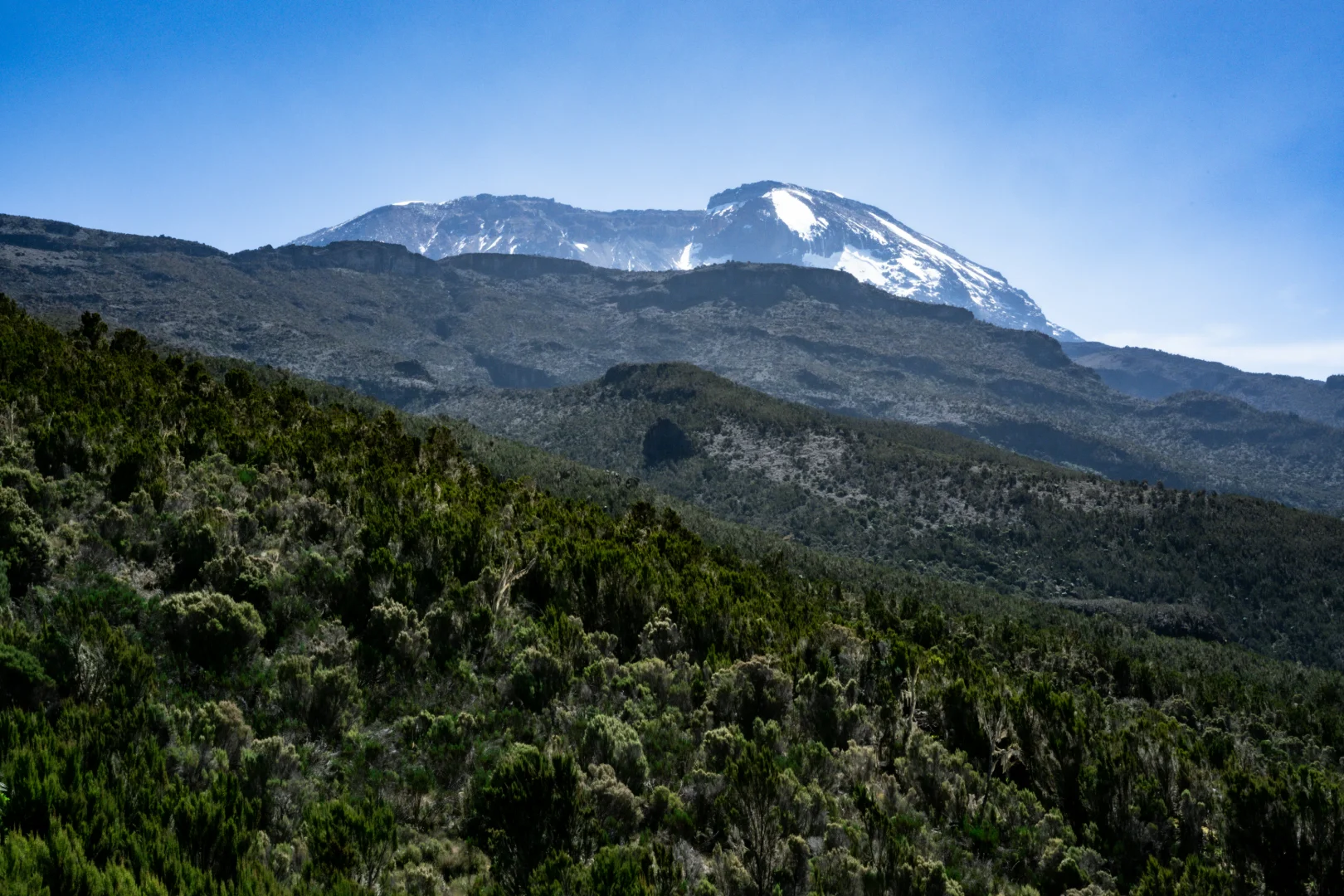
The trail breaks out of the forest into open heath and moorland, with giant heathers and tall grasses, and the views open up in every direction. You gain height steadily all day. On clear days the jagged peaks of Mawenzi rise ahead, with Kibo's snow-capped dome to the west. Horombo Hut, at 3720m, is a larger hut complex and your base for the next two nights, so you won't need to pack up tomorrow. Night: Horombo Hut. Meals: breakfast, lunch and dinner.

Meals:Breakfast, Lunch, Dinner
Heath and moorland zoneViews of Mawenzi PeakKibo snow-cap viewsHorombo Hut complex
3
Day 3

Acclimatisation Day at Horombo Hut (3720m)

This is the day that sets the 6-day climb apart. You stay at Horombo to acclimatise, with an optional walk up to Zebra Rocks at 4000m, named for the black-and-white stripes in the rock. The short outing gives your body some extra height before you come back down to rest at the hut. Spend the rest of the day drinking plenty of water and taking it easy. The five-day version skips this day and goes straight on to Kibo. Night: Horombo Hut. Meals: breakfast, lunch and dinner.

Meals:Breakfast, Lunch, Dinner
Zebra Rocks day hike (4000m)Striking mineral-striped rock formationsHigh-altitude acclimatizationRest and hydration day
4
Day 4

Horombo Hut (3720m) to Kibo Hut (4703m)

Today you cross the Saddle, the stark alpine desert between Mawenzi and Kibo. It's barren and windswept, with little vegetation, and every step takes more effort as the air thins. Kibo Hut sits at 4703m at the base of the summit cone. You'll have an early dinner and go to bed early, because the summit attempt starts around midnight. Lay out your warm layers and headlamp before you sleep. Night: Kibo Hut. Meals: breakfast, lunch and dinner.

Meals:Breakfast, Lunch, Dinner
The Saddle — alpine desert crossingMawenzi and Kibo viewsKibo Hut at base of summit coneEarly rest before summit night
5
Day 5

Kibo Hut (4703m) to Uhuru Peak (5895m) to Horombo Hut (3720m)

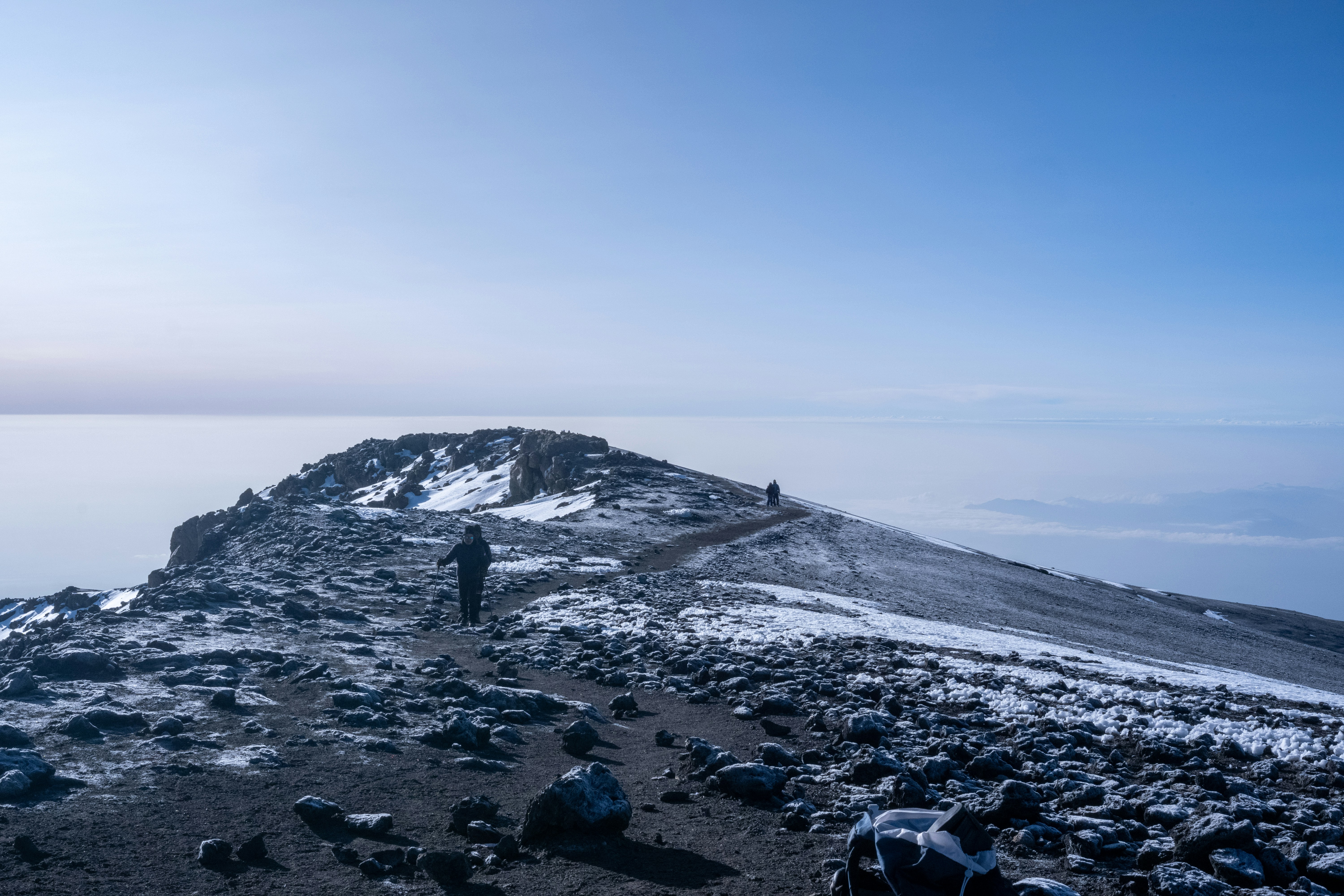
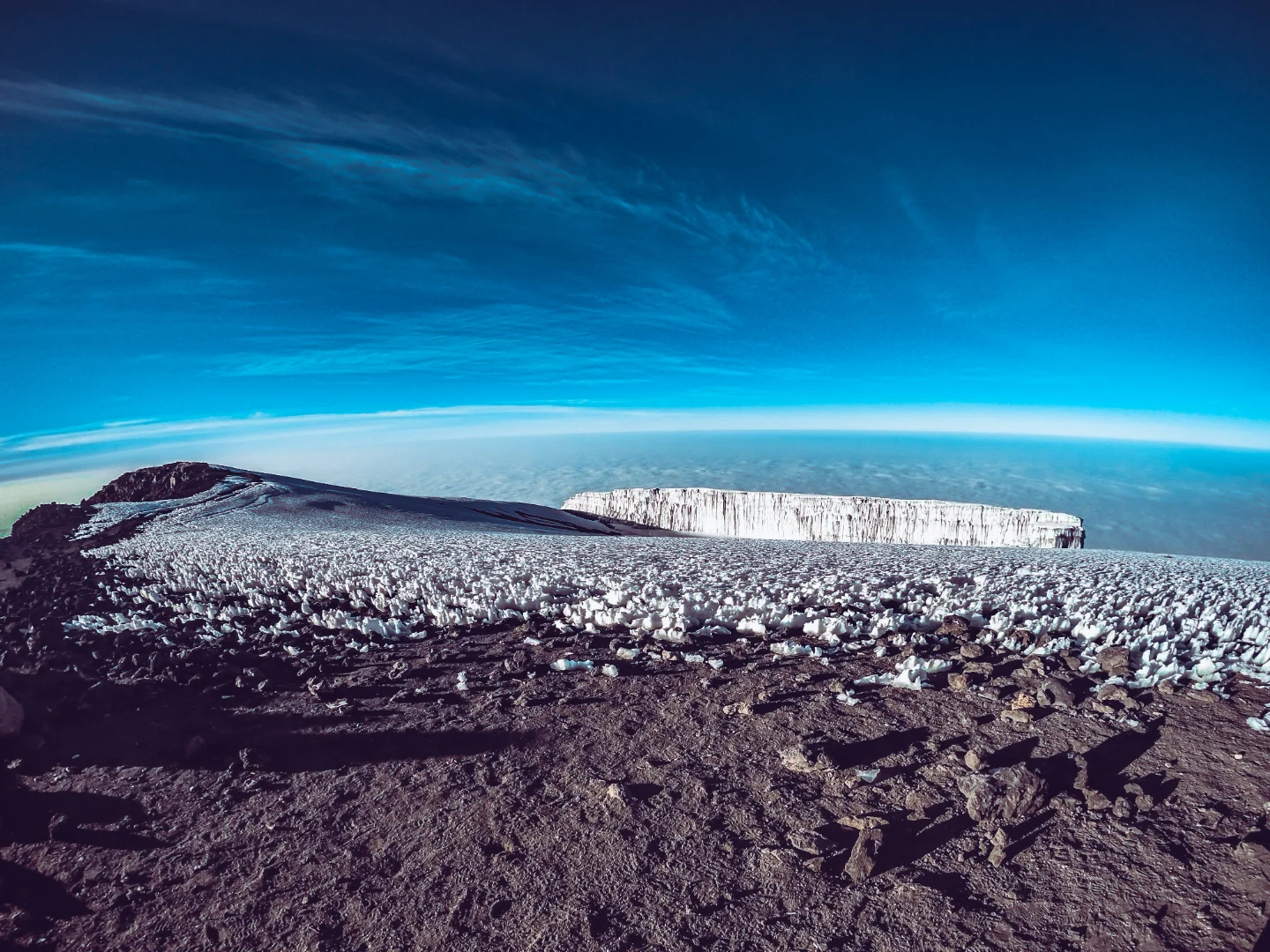
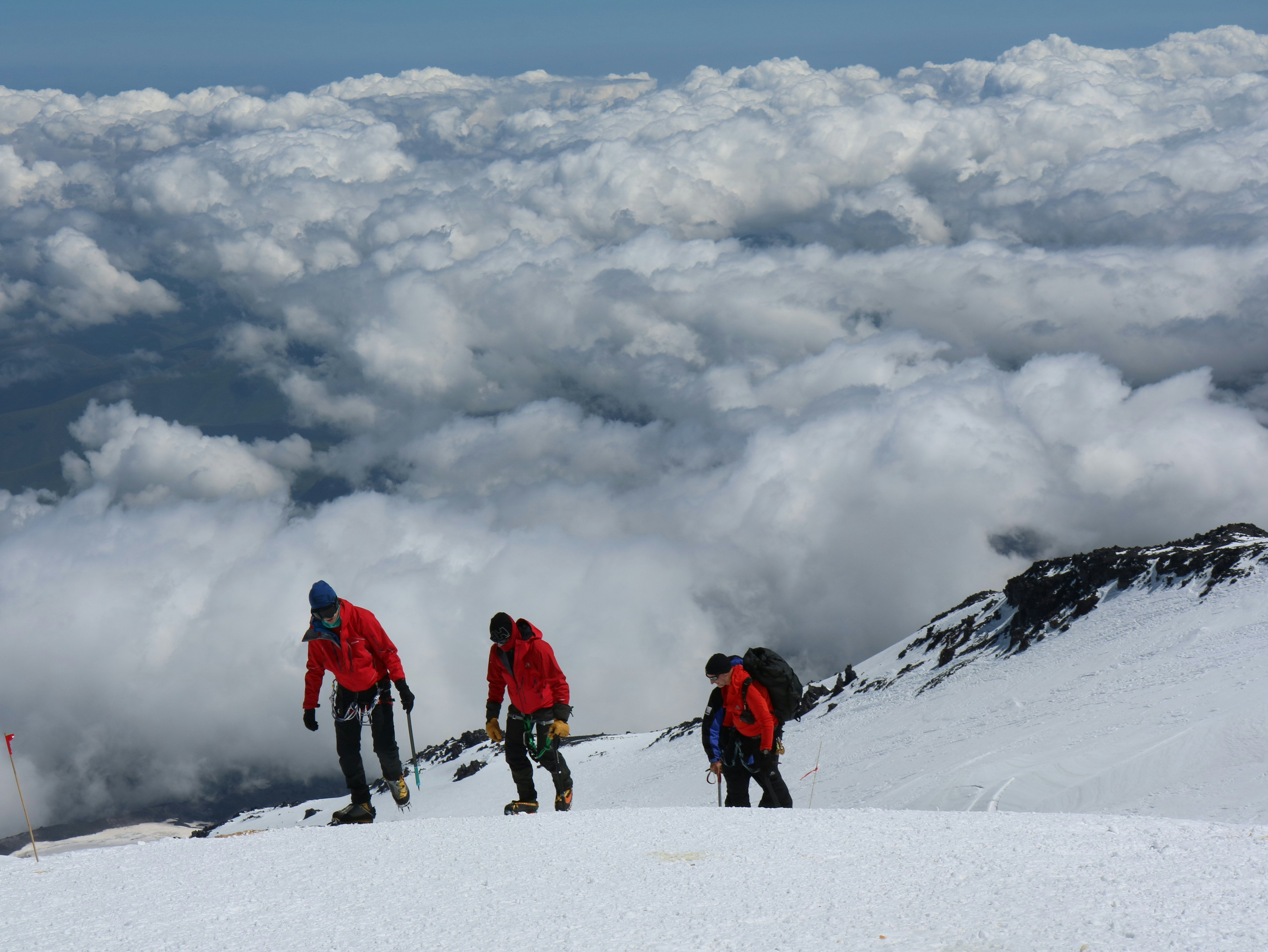
You set off around midnight, zigzagging up scree slopes by headlamp in bitter cold. Gilman's Point on the crater rim, at 5685m, is the first big milestone. From there you follow the rim to Uhuru Peak at 5895m, and if the timing is right, sunrise turns the glaciers orange and gold. Then comes the long part. You descend back through Kibo Hut and keep going all the way down to Horombo, which makes this the longest and hardest day of the climb. Night: Horombo Hut. Meals: breakfast, lunch and dinner.

Meals:Breakfast, Lunch, Dinner
Midnight summit departureGilman's Point (5685m) crater rimUhuru Peak (5895m) — Roof of AfricaSunrise over glaciersLong descent to Horombo
6
Day 6

Horombo Hut (3720m) to Marangu Gate (1860m)

The last day is a long but pleasant walk down the way you came, through moorland and then rainforest. After summit night, the warmer, thicker air is a relief, and the pace is brisk. The whole team walks down together. At Marangu Gate you sign the park register, receive your summit certificate and celebrate with the crew before the transfer to your hotel. Meals: breakfast and lunch. No night on the mountain.

Meals:Breakfast, Lunch
Moorland and rainforest descentSummit certificate ceremonyCrew celebrationTransfer to hotel
Safari Route Map

Route map unavailable

Contact us for detailed route information

Plan Your Safari

Dates & Pricing

Tailored quote

Designed around your journey

Tell us your dates and group size and our safari specialist will prepare a personal quote.

Departure

Contact us to discuss the best available travel dates for this safari.

What's Included

Your Safari Package

Complete Safari Package
  • Mountain hut accommodation
  • All meals included
  • Professional guides
  • Park fees and permits
  • Shared sleeping facilities
  • Emergency first aid
Not Included
  • International flights
  • Travel insurance
  • Personal gear and clothing
  • Tips for staff
  • Visa fees
  • Personal expenses

We'll always tell you exactly what your safari covers before you pay. Need help with flights, visas, or insurance? Just ask — we arrange it all.

Safari Value Summary
Total Inclusions
6 Items
Meals Included
15 Meals
Accommodation
5 Nights
Game Drives
8+ Drives
Safari Days
6 Days
All-Inclusive Experience

Our safari package includes everything you need for an unforgettable adventure. No hidden costs or surprise charges.

Prefer it tailor-made? Design your safari
Independent Reviews

What Travellers Say About Us

Reviews of our safaris on independent platforms, from guests who travelled with our Arusha team.

Good to Know

6-Day Marangu Route Climb: Frequently Asked Questions

Why is the Marangu Route done over six days instead of five?

The extra day is an acclimatisation day at Horombo Hut (3720m), which gives your body more time to adjust before the climb to Kibo Hut. The standard five-day climb goes up too fast for many people. The extra day includes an optional walk to Zebra Rocks at about 4000m, and it gives you a fairer chance of reaching Uhuru Peak.

What are the huts like on the Marangu Route?

Simple and shared. Marangu is the only Kilimanjaro route where you sleep in huts rather than tents all the way up. Mandara Hut is a group of A-frame wooden cabins, and the huts have bunk beds and shared dining halls, so evenings are sociable. You'll share them with other climbers.

What are the altitudes of the huts on the Marangu Route?

You start at Marangu Gate (1860m), sleep at Mandara Hut (2720m), then spend two nights at Horombo Hut (3720m) and one at Kibo Hut (4703m). On summit night you pass Gilman's Point on the crater rim at 5685m and continue to Uhuru Peak at 5895m. After the summit you sleep at Horombo again before walking out to the gate.

What happens on summit night from Kibo Hut?

You leave Kibo Hut around midnight and zigzag up scree slopes by headlamp in bitter cold. You reach Gilman's Point on the crater rim at 5685m, then follow the rim to Uhuru Peak at 5895m, ideally around sunrise. The descent is long, back through Kibo and down to Horombo, so it's a very full day.

Do the huts make Marangu an easier climb?

Not really. The huts make it more comfortable, but the climb is just as demanding, and summit night is steep and cold. It needs good fitness, though no technical skills. The biggest challenge is the height gain between Horombo and Kibo, which is why we run this six-day version with an extra day at Horombo.

Where does the Marangu climb start and finish?

At Marangu Gate (1860m), because you go up and come down the same path. On the last day you walk down through moorland and rainforest, sign the park register at the gate, receive your summit certificate and transfer to your hotel. Kilimanjaro International Airport is the usual arrival point for climbers flying in.

Who is the Marangu Route best suited to?

Climbers who'd rather sleep in a hut and eat in a dining hall than camp, including people who simply don't enjoy tents. It still needs good fitness and determination, so it's not a shortcut for people new to hiking. If scenic variety matters most, Lemosho may fit better, and our Arusha team can talk through the options.

When is the best time to climb the Marangu Route?

There are no fixed departure dates listed, so ask us. As a general guide, the drier months from about late June to October and from around January to early March are the most popular. The huts give shelter in wet weather, but the long rains of roughly April and May still make the trails muddy.

What should I pack for the Marangu climb?

Layers for warm rainforest, cool moorland and freezing temperatures on summit night. Bring broken-in waterproof boots, thermal base layers, a fleece, an insulated jacket, a waterproof shell, warm gloves and a hat, a headlamp with spare batteries, a daypack and trekking poles. Most visitors also need a Tanzanian tourist visa, through the official eVisa portal or on arrival.

How long is the 6-Day Marangu Route Climb?

The 6-Day Marangu Route Climb is 6 days and 5 nights. The day-by-day itinerary on this page shows where you go and stay each day.

Which parks and places does the 6-Day Marangu Route Climb visit?

This trip visits Mount Kilimanjaro.

How difficult is the 6-Day Marangu Route Climb?

It is rated moderate: a reasonable level of general fitness is enough.

What is the group size on the 6-Day Marangu Route Climb?

It runs for groups of 2 to 15 travellers.

What is included in the 6-Day Marangu Route Climb?

Included: Mountain hut accommodation, All meals included, Professional guides, Park fees and permits, Shared sleeping facilities and Emergency first aid.

What is not included in the 6-Day Marangu Route Climb?

Not included: International flights, Travel insurance, Personal gear and clothing, Tips for staff, Visa fees and Personal expenses.

Your safari is waiting

Join thousands of travelers who have experienced the magic of Africa's wildlife with us.