7-Day Machame Route Climb
Mountain Trekking · Trip EA-6E7C

7-Day Machame Route Climb

Duration7days
Levelchallenging
Scroll

Last updated:

Safari Overview

Your Journey

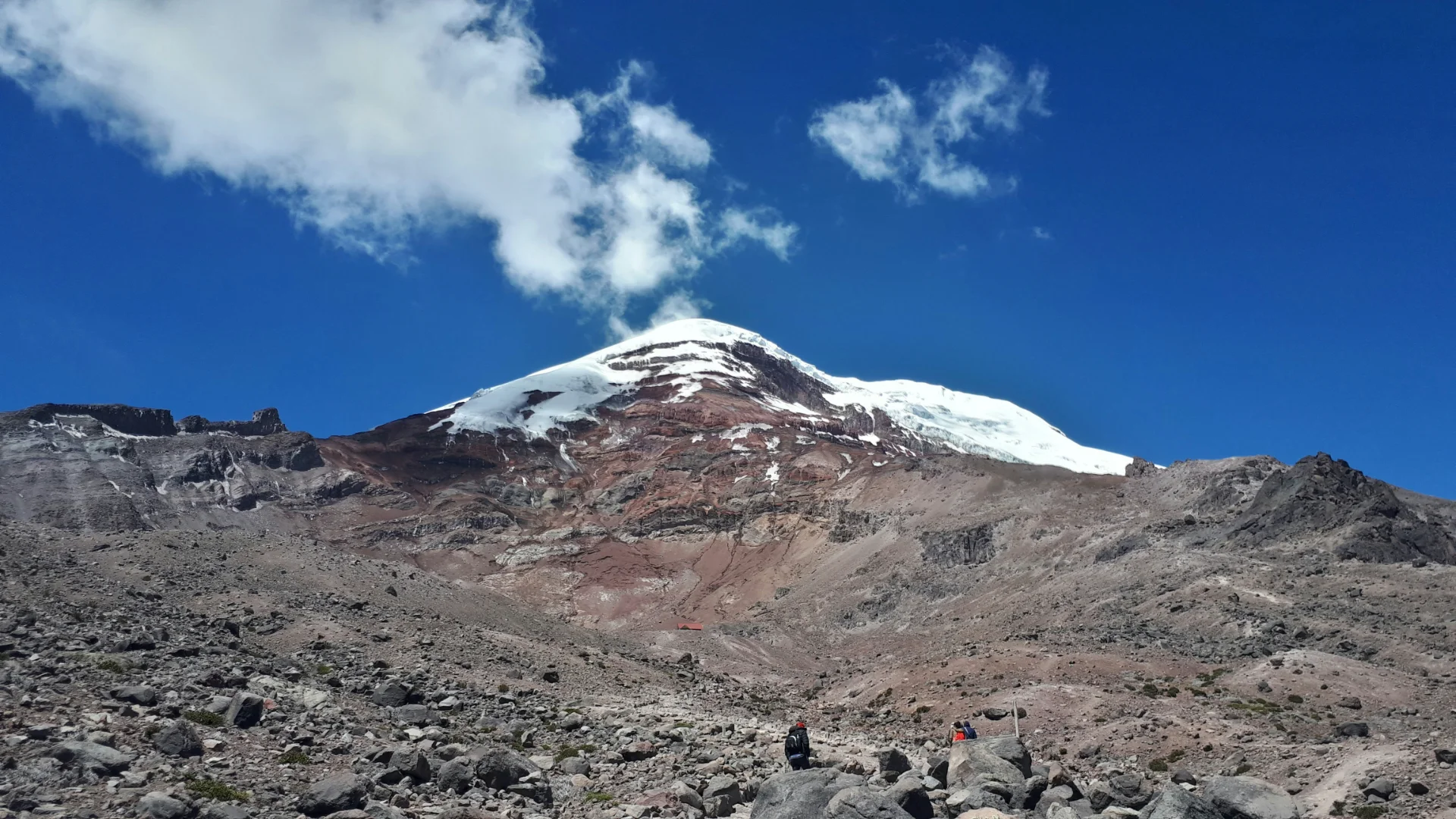
Machame is the most popular route up Kilimanjaro. It climbs from rainforest through moorland and alpine desert to the glaciers at Uhuru Peak, 5,895 metres, the highest point in Africa. We run the Machame Route, 7 days from gate to gate, with a night at Karanga Camp that splits the climb to Barafu and gives your body more time to adjust. It suits fit hikers with no technical climbing experience who are ready for steep ground, cold nights and a long summit push.

You start at Machame Gate (1,800 m) and climb through forest to Machame Camp, then up onto the Shira Plateau at Shira Camp (3,840 m). Day three follows climb high, sleep low: up to Lava Tower at 4,630 m and down to Barranco Camp. Day four opens with the Barranco Wall, a steep scramble where you'll use your hands now and then, before the walk to Karanga Camp. Day five brings you to Barafu Camp (4,673 m). You leave around midnight, pass Stella Point on the crater rim and reach Uhuru Peak at dawn, then descend to Mweka Camp. On day seven you walk down to Mweka Gate and collect your summit certificate.

Your guides, all camping equipment, meals and water, park fees and airport transfers are included, and the team carries emergency oxygen and a first aid kit. Ask our Arusha team about hotel nights before and after the climb.

Share This Safari
Safari Highlights
  • Rainforest start at Machame Gate, with colobus monkeys
  • Views west across the Shira Plateau to Shira Cathedral
  • Climb high, sleep low via Lava Tower (4630m)
  • Barranco Wall scramble with southern glacier views
  • Extra acclimatisation night at Karanga Camp
  • Dawn on Uhuru Peak (5895m) via Stella Point
7-Day Machame Route Climb Safari Overview
Featured7-Day Machame Route Climb

Comparing routes? Read our Machame Route guide for the altitude profile, summit success rate and a day-by-day breakdown of the route.

Day-by-Day Itinerary

Your Safari Unfolds

Your 7-day adventure across Africa's most spectacular wilderness areas

1
Day 1

Machame Gate (1800m) to Machame Camp (3020m)

You register at Machame Gate, where the porters are organised, then walk into montane rainforest. The trail winds steadily uphill through moss-draped trees full of birdcalls, and colobus monkeys are often in the canopy, with blue monkeys sometimes too. It's a long, steady climb rather than a steep one. Machame Camp sits on a ridge at 3020m, and from here you get your first views out over the top of the forest. Night: Machame Camp. Meals: breakfast, lunch and dinner.

Meals:Breakfast, Lunch, Dinner
Machame Gate registrationMontane rainforest trailColobus monkeys and blue monkeysMoss-covered trees and epiphytesFirst camp above the treeline
2
Day 2

Machame Camp (3020m) to Shira Camp (3840m)

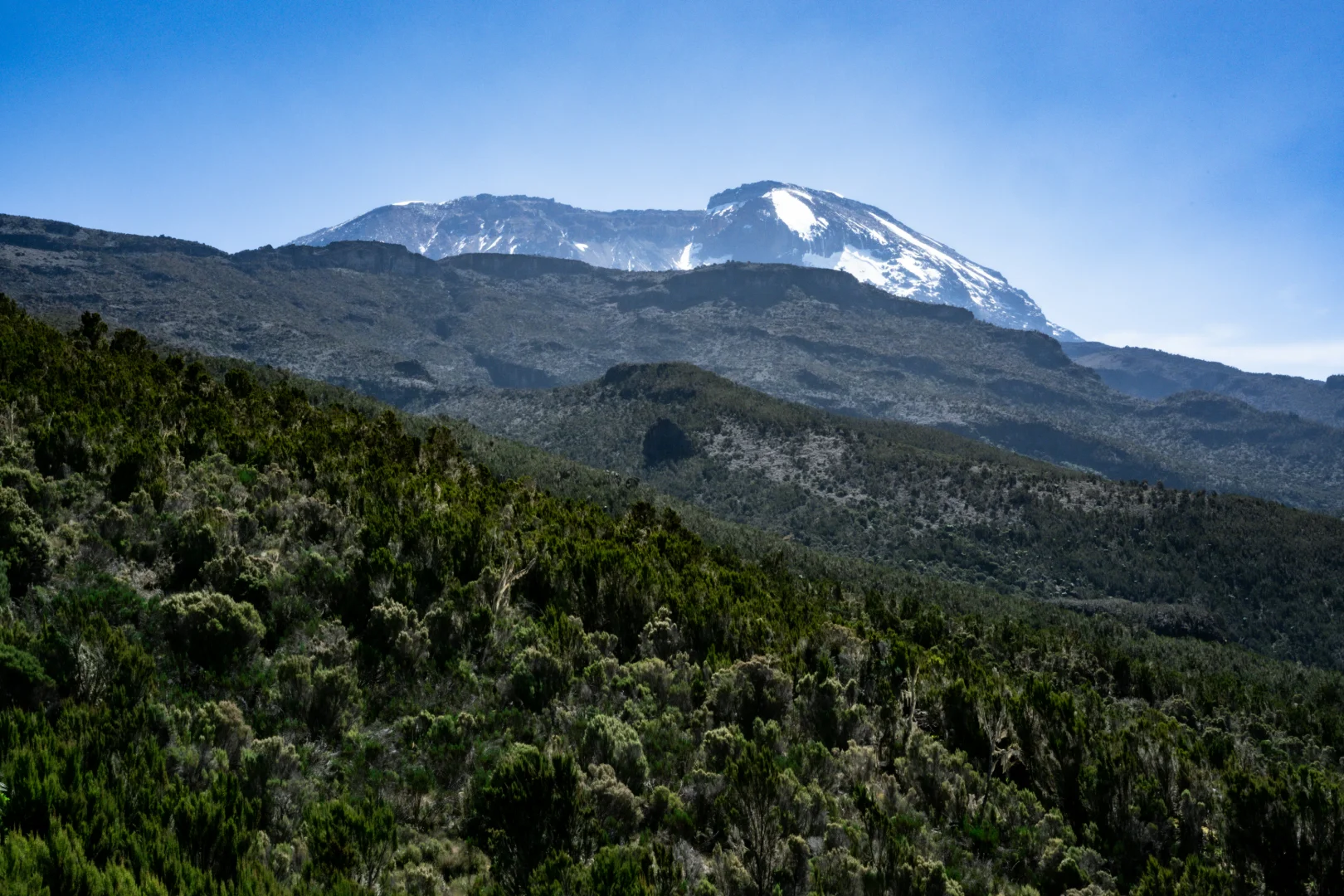
You leave the forest behind and climb into heath and moorland, where giant heathers give way to open grassland. The ground gets rockier as you cross small streams and reach the edge of the Shira Plateau. You gain less height today than yesterday, which helps. Shira Camp is at 3840m, and from camp the view runs west across the plateau to the distant Shira Cathedral. Night: Shira Camp. Meals: breakfast, lunch and dinner.

Meals:Breakfast, Lunch, Dinner
Heath and moorland zone transitionShira Plateau panoramic viewsGiant heather forestViews of Shira Cathedral
3
Day 3

Shira Camp (3840m) to Lava Tower (4630m) to Barranco Camp (3960m)

This is a key acclimatisation day, built on climb high, sleep low. You walk steadily up to Lava Tower at 4630m, where the air is noticeably thinner and the ground turns to alpine desert. Lunch is at the tower. Then you descend nearly 700 metres to Barranco Camp at 3960m, set among senecio and lobelia plants below the Barranco Wall. The wall is tomorrow morning's first task, and you'll have a good look at it from your tent. Night: Barranco Camp. Meals: breakfast, lunch and dinner.

Meals:Breakfast, Lunch, Dinner
Lava Tower acclimatization (4630m)Climb high, sleep low strategyAlpine desert landscapeBarranco Wall views from campSenecio and lobelia plants
4
Day 4

Barranco Camp (3960m) to Karanga Camp (3995m)

The morning starts with the Barranco Wall, a steep but non-technical scramble and one of the most exciting sections of the climb. You'll use your hands now and then, with your guides setting a steady pace. From the top there are wide views of the southern glaciers and the route ahead. The trail then rises and falls across a series of ridges before dropping into the Karanga Valley. Camp is at 3995m, about the same height as last night. That's the point of this extra day. Night: Karanga Camp. Meals: breakfast, lunch and dinner.

Meals:Breakfast, Lunch, Dinner
Barranco Wall scrambleSouthern glacier viewsKaranga ValleyPanoramic ridge walking
5
Day 5

Karanga Camp (3995m) to Barafu Camp (4673m)

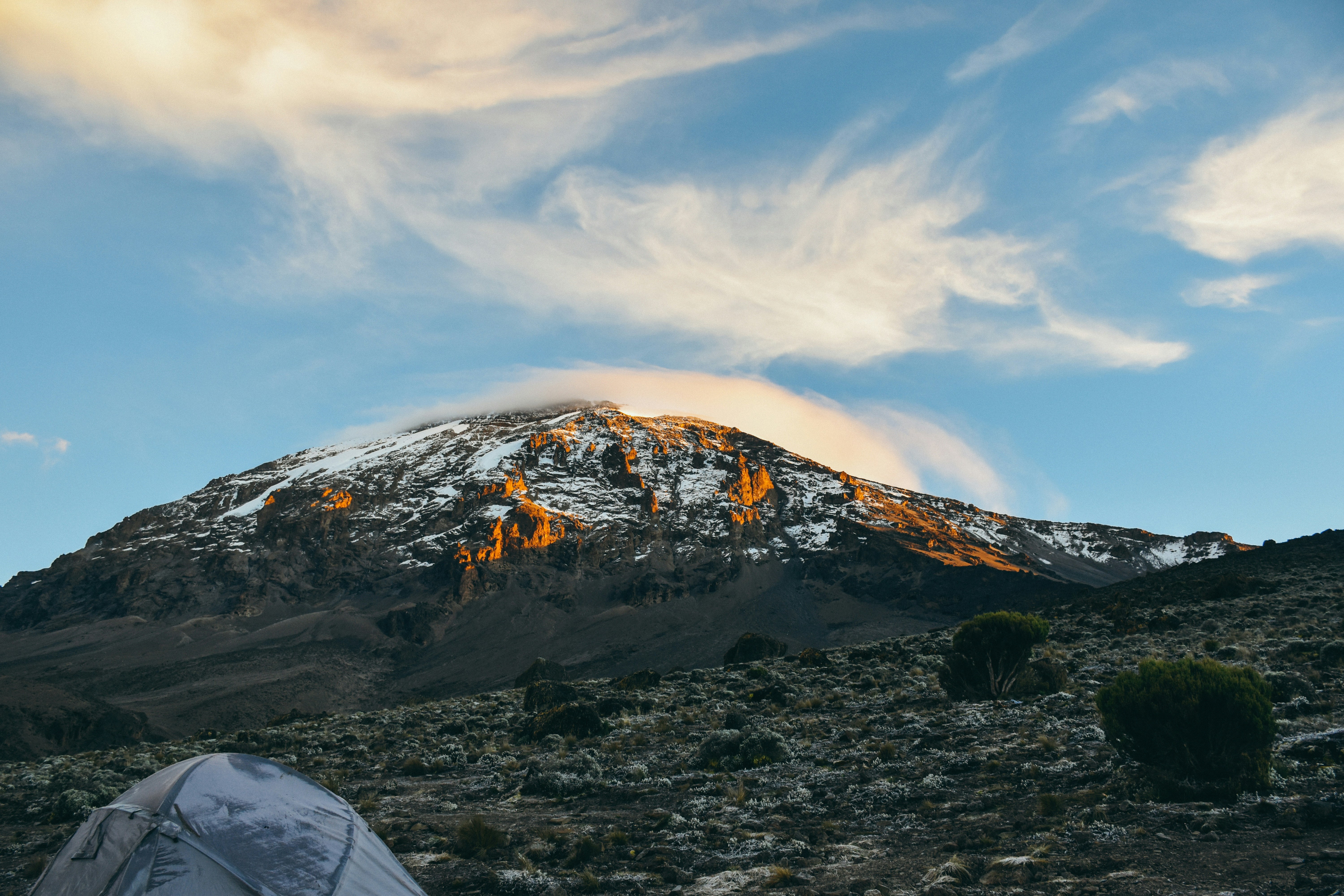
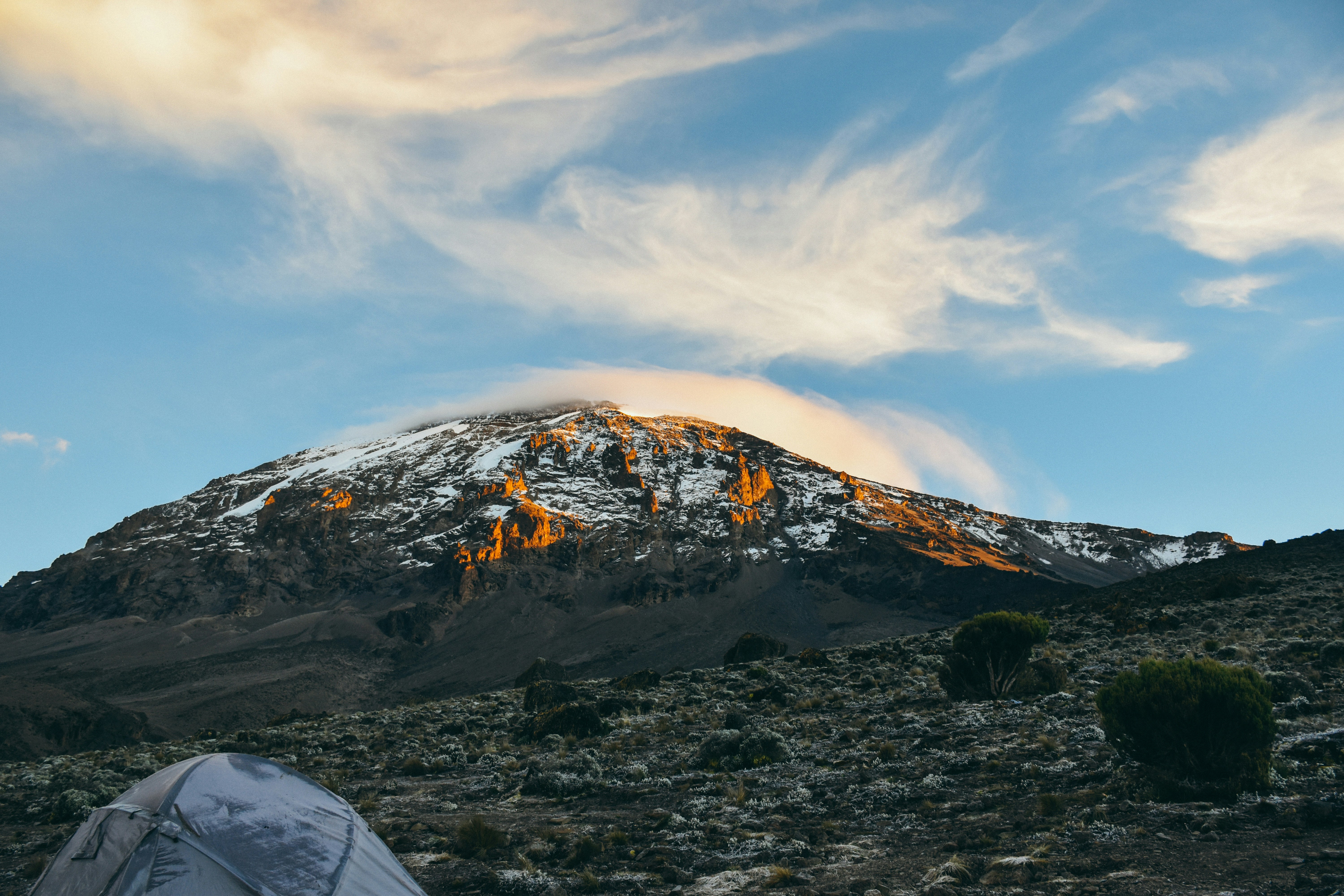
The trail climbs steadily through barren alpine desert and the last traces of vegetation disappear. Underfoot it's loose scree and rock, and the air is thin. Barafu Camp at 4673m is the launch point for the summit attempt, and on clear days you can see Mawenzi Peak and the summit glaciers from camp. Get your summit kit ready and rest as much as you can, because you'll be leaving again around midnight. Night: Barafu Camp. Meals: breakfast, lunch and dinner.

Meals:Breakfast, Lunch, Dinner
Alpine desert terrainBarafu base camp arrivalSummit route previewViews of Mawenzi Peak
6
Day 6

Barafu Camp (4673m) to Uhuru Peak (5895m) to Mweka Camp (3068m)

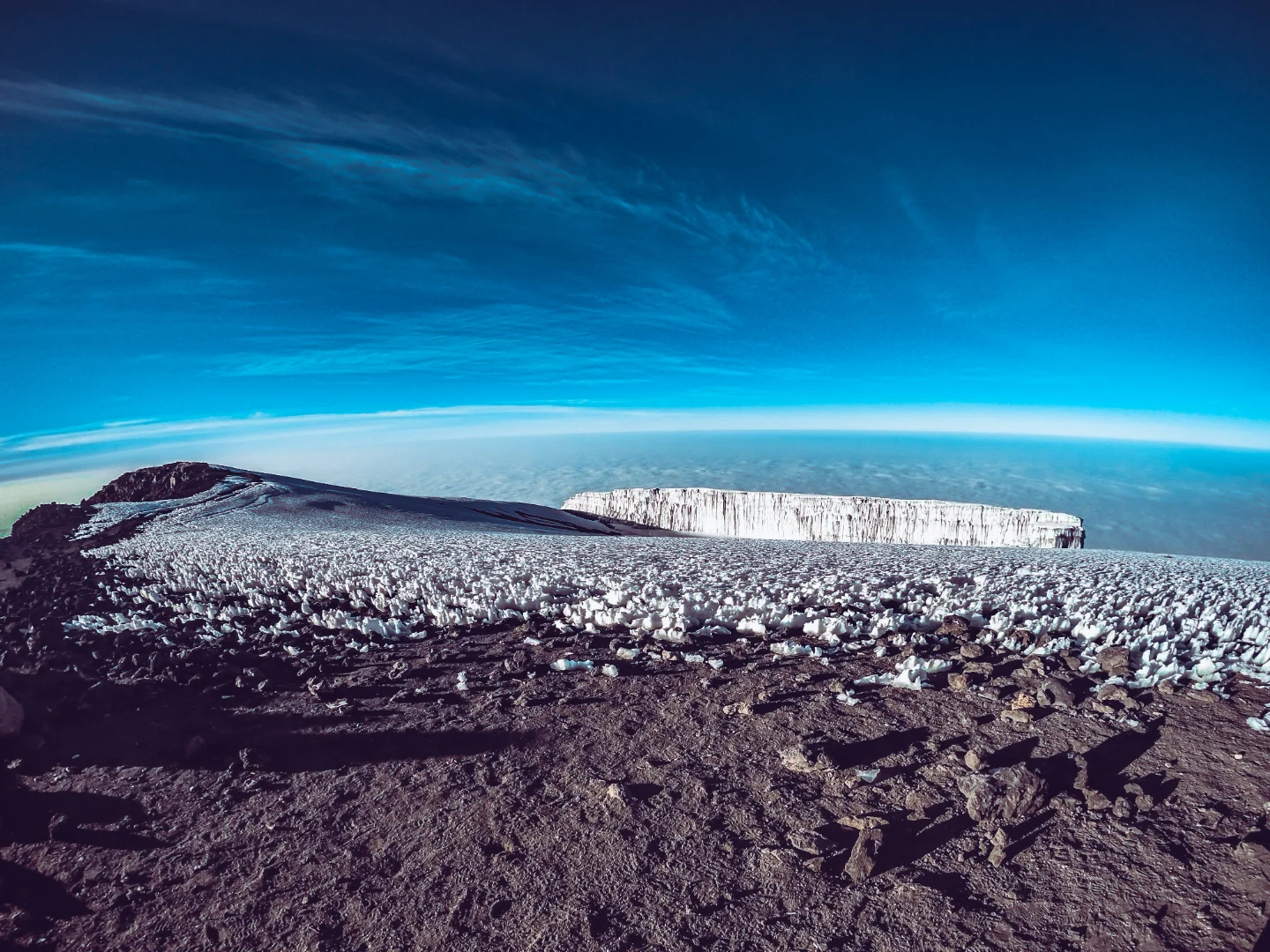
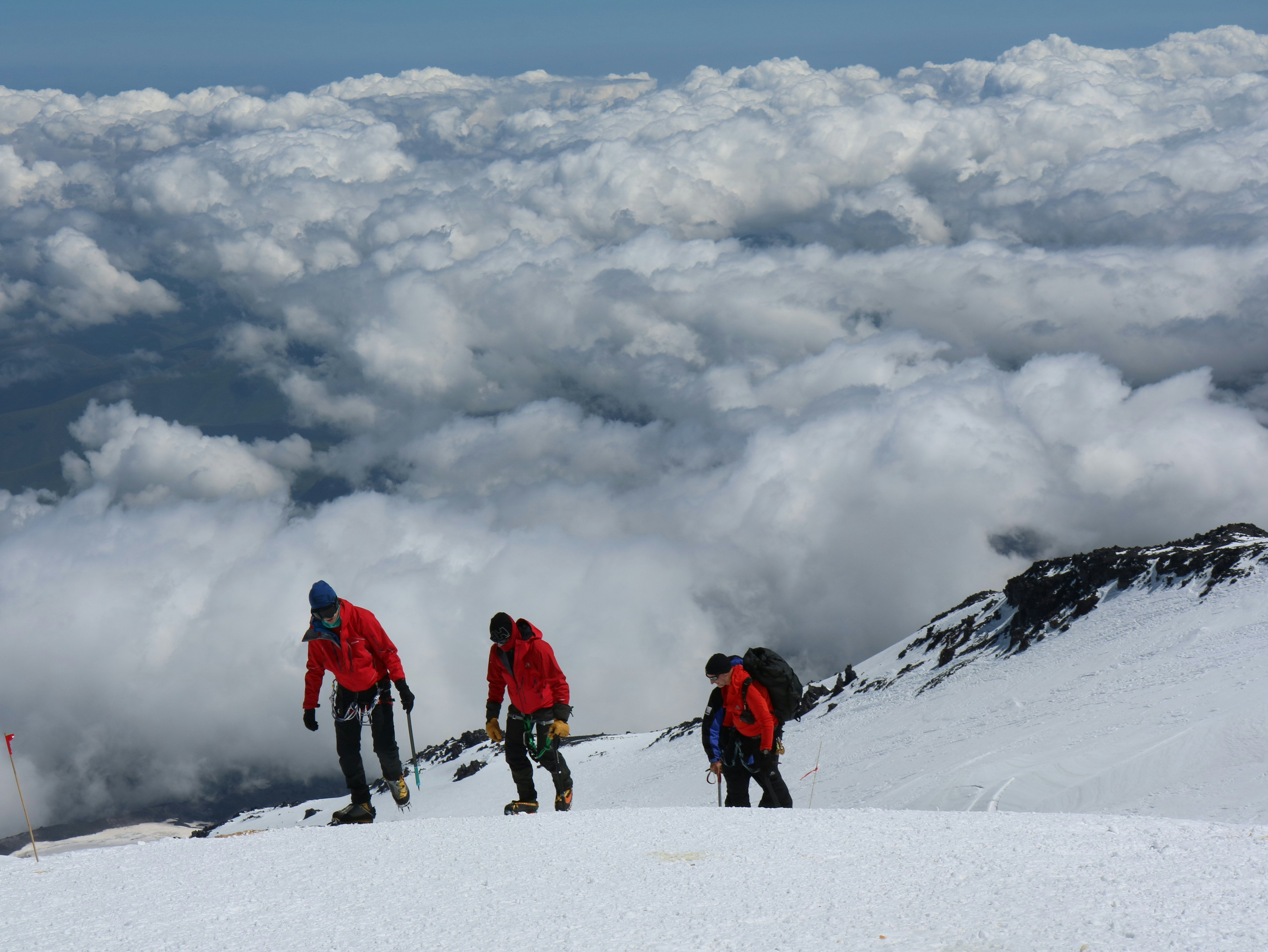
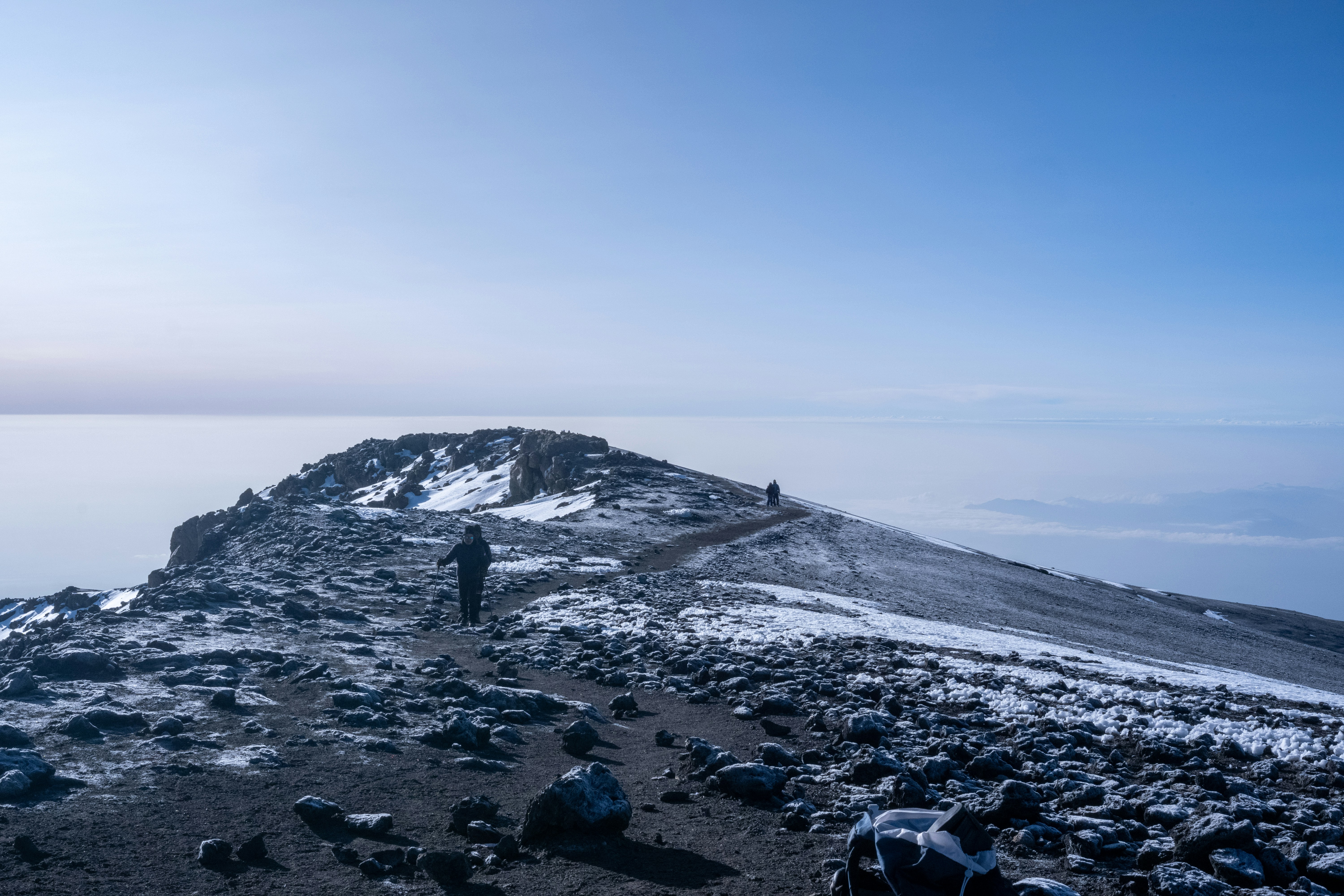
You set off around midnight by headlamp, switchbacking up steep scree in freezing temperatures toward Stella Point on the crater rim at 5756m. From Stella Point it's roughly an hour along the rim to Uhuru Peak, at 5895m the highest point in Africa, where dawn lights up the glaciers and the clouds far below. After summit photos you come down fast on the scree to Barafu for a rest, then carry on to Mweka Camp in the forest. It's a very long day. Night: Mweka Camp. Meals: breakfast, lunch and dinner.

Meals:Breakfast, Lunch, Dinner
Midnight summit departureStella Point (5756m) crater rimUhuru Peak (5895m) — Roof of AfricaSunrise over glaciersRapid scree descent
7
Day 7

Mweka Camp (3068m) to Mweka Gate (1640m)

The last descent follows a well-worn trail through montane rainforest, and the air gets warmer and thicker with every step. Birdsong comes back and the canopy closes overhead. Your legs will feel the long descent of the day before, so take it steadily. At Mweka Gate you receive your summit certificate and celebrate with your crew. This is also when tips for the crew are usually handed over. Then we transfer you to your hotel in Moshi. Meals: breakfast. No night on the mountain.

Meals:Breakfast
Rainforest descentSummit certificate ceremonyCrew celebration and tippingTransfer to hotel in Moshi
Safari Route Map

Route map unavailable

Contact us for detailed route information

Plan Your Safari

Dates & Pricing

Tailored quote

Designed around your journey

Tell us your dates and group size and our safari specialist will prepare a personal quote.

Departure

Contact us to discuss the best available travel dates for this safari.

What's Included

Your Safari Package

Complete Safari Package
  • Professional mountain guides
  • All camping equipment
  • All meals and water
  • Park fees and permits
  • Airport transfers
  • Emergency oxygen
  • First aid kit
Not Included
  • International flights
  • Travel insurance
  • Personal gear
  • Tips for guides
  • Visa fees
  • Personal expenses

We'll always tell you exactly what your safari covers before you pay. Need help with flights, visas, or insurance? Just ask — we arrange it all.

Safari Value Summary
Total Inclusions
7 Items
Meals Included
18 Meals
Accommodation
6 Nights
Game Drives
10+ Drives
Safari Days
7 Days
All-Inclusive Experience

Our safari package includes everything you need for an unforgettable adventure. No hidden costs or surprise charges.

Prefer it tailor-made? Design your safari
Independent Reviews

What Travellers Say About Us

Reviews of our safaris on independent platforms, from guests who travelled with our Arusha team.

Good to Know

7-Day Machame Route Climb: Frequently Asked Questions

What is the best time of year to climb the Machame Route?

The drier months, roughly January to early March and late June to October, give the most reliable conditions on Kilimanjaro. The long rains of April and May make trails wet and muddy, and November brings short rains. There are no fixed departures listed for this climb, so ask us for dates and we'll help you pick a window.

How does the 7-day Machame itinerary help with acclimatisation?

In two ways. On day three you climb high to Lava Tower at 4,630 metres, then sleep lower at Barranco Camp at 3,960 metres. On day four a night at Karanga Camp, 3,995 metres, splits the stretch between Barranco and Barafu, so your body has more time to adjust before the summit push.

What are the camps and altitudes on the Machame Route?

You start at Machame Gate (1,800 m) and camp at Machame Camp (3,020 m), Shira Camp (3,840 m), Barranco Camp (3,960 m), Karanga Camp (3,995 m) and Barafu Camp (4,673 m). After the summit at Uhuru Peak (5,895 m) you descend to Mweka Camp (3,068 m) and finish at Mweka Gate (1,640 m). Every night is spent camping.

Is the Barranco Wall dangerous or technical?

It's steep but not technical. You'll use your hands now and then at the start of day four, but you don't need climbing experience, and your guides lead at a steady pace. From the top there are wide views of the southern glaciers before the trail crosses a series of ridges to the Karanga Valley.

What is summit night like on the Machame Route?

You leave Barafu Camp around midnight by headlamp and switchback up steep scree in freezing temperatures to Stella Point on the crater rim at 5,756 metres. From there it's roughly an hour along the rim to Uhuru Peak, 5,895 metres, as dawn lights the glaciers. Then you descend to Barafu for a rest and carry on down to Mweka Camp.

Do I need climbing experience for the Machame Route?

No technical skills, but you should be fit and comfortable on steep ground, with cold nights and a long summit push ahead. Regular hill walking with a loaded daypack in the months before you come is the best preparation. Our Arusha team can suggest a training plan when you book.

Where does the Machame climb start and finish?

It starts at Machame Gate on the southern side of Kilimanjaro, where you register and meet your porters before entering the rainforest. It finishes at Mweka Gate, where you collect your summit certificate and celebrate with your crew before the transfer to your hotel in Moshi. Ask us about hotel nights before and after the climb.

What should I pack for the Machame Route?

Layers for every zone, from warm rainforest to sub-zero summit night: base layers, a fleece, an insulated down jacket, a waterproof shell, warm gloves and hat, and a headlamp with spare batteries. Well broken-in boots and trekking poles help on the scree descent. Pack your main kit in a soft duffel for the porters and carry a daypack yourself.

What happens if I get altitude sickness on Kilimanjaro?

Tell your guide straight away about headaches, nausea or breathlessness. Mild symptoms are common and often ease with rest, water and a slower pace, but if they get worse the answer is to go down. The team carries emergency oxygen and a first aid kit, and the gradual profile of this route is designed to reduce the risk.

How long is the 7-Day Machame Route Climb?

The 7-Day Machame Route Climb is 7 days and 6 nights. The day-by-day itinerary on this page shows where you go and stay each day.

Which parks and places does the 7-Day Machame Route Climb visit?

This trip visits Mount Kilimanjaro.

How difficult is the 7-Day Machame Route Climb?

It is rated challenging: good fitness is recommended.

What is the group size on the 7-Day Machame Route Climb?

It runs for groups of 2 to 12 travellers.

What is included in the 7-Day Machame Route Climb?

Included: Professional mountain guides, All camping equipment, All meals and water, Park fees and permits, Airport transfers, Emergency oxygen and First aid kit.

What is not included in the 7-Day Machame Route Climb?

Not included: International flights, Travel insurance, Personal gear, Tips for guides, Visa fees and Personal expenses.

Your safari is waiting

Join thousands of travelers who have experienced the magic of Africa's wildlife with us.