8-Day Lemosho Route Climb
Mountain Trekking · Trip EA-326C

8-Day Lemosho Route Climb

Duration8days
Levelchallenging
Scroll

Last updated:

Safari Overview

Your Journey

We run the Lemosho Route, 8 days from gate to gate, and it's the climb we usually point first-time climbers towards when they want scenery and time to acclimatise. It approaches Kilimanjaro from the remote western side at Londorossi Gate and passes through montane forest, heather moorland, the Shira Plateau and alpine desert before the summit push to Uhuru Peak at 5895m. Expect long walking days. They need good fitness, but no technical climbing.

Day one is a shaded forest trail, often with colobus monkeys overhead, to Mti Mkubwa Camp. Day two is long, out of the forest and across the Shira Plateau to Shira 2 Camp at 3840m. Day three is the key acclimatisation day: up to Lava Tower at 4630m, then down to sleep at Barranco Camp. The Barranco Wall scramble opens day four on the way to Karanga Camp, and on day five scree slopes lead to Barafu Camp at 4673m. A rest day at Barafu buys extra time to adjust. Then you leave around midnight, reach Stella Point at dawn, stand on Uhuru Peak and descend to Mweka Camp. The last morning drops through rainforest to Mweka Gate.

Porters carry the camping equipment, so you walk with a daypack. Your guides, a mountain chef, park fees and airport transfers are included, along with emergency evacuation insurance. Talk to our Arusha team about fitness, kit and dates.

Share This Safari
Safari Highlights
  • Quiet western start at Londorossi Gate
  • Colobus monkeys in the montane forest on day one
  • Crossing the Shira Plateau among giant lobelias and groundsels
  • Climb high, sleep low via Lava Tower (4630m)
  • Barranco Wall scramble with southern icefield views
  • A full rest day at Barafu before the summit push
8-Day Lemosho Route Climb Safari Overview
Featured8-Day Lemosho Route Climb

Comparing routes? Read our Lemosho Route guide for the altitude profile, summit success rate and a day-by-day breakdown of the route.

Day-by-Day Itinerary

Your Safari Unfolds

Your 8-day adventure across Africa's most spectacular wilderness areas

1
Day 1

Londorossi Gate to Mti Mkubwa Camp (2895m)

The day starts with a drive along Kilimanjaro's western flank to Londorossi Gate, where you register with the park. From there the trail is gentle and shaded, climbing through montane forest under tall Podocarpus trees. Black-and-white colobus monkeys are often in the branches overhead, and there's birdsong most of the way. It's an easy first walk, and that's deliberate, because your body starts adjusting before the big height gains. Camp is at Mti Mkubwa, 'Big Tree', in a small clearing in the forest at 2895m. Night: Mti Mkubwa Camp. Meals: lunch and dinner.

Meals:Lunch, Dinner
Londorossi Gate registrationPristine montane forestBlack-and-white Colobus monkeysMti Mkubwa (Big Tree) camp
2
Day 2

Mti Mkubwa Camp (2895m) to Shira 2 Camp (3840m)

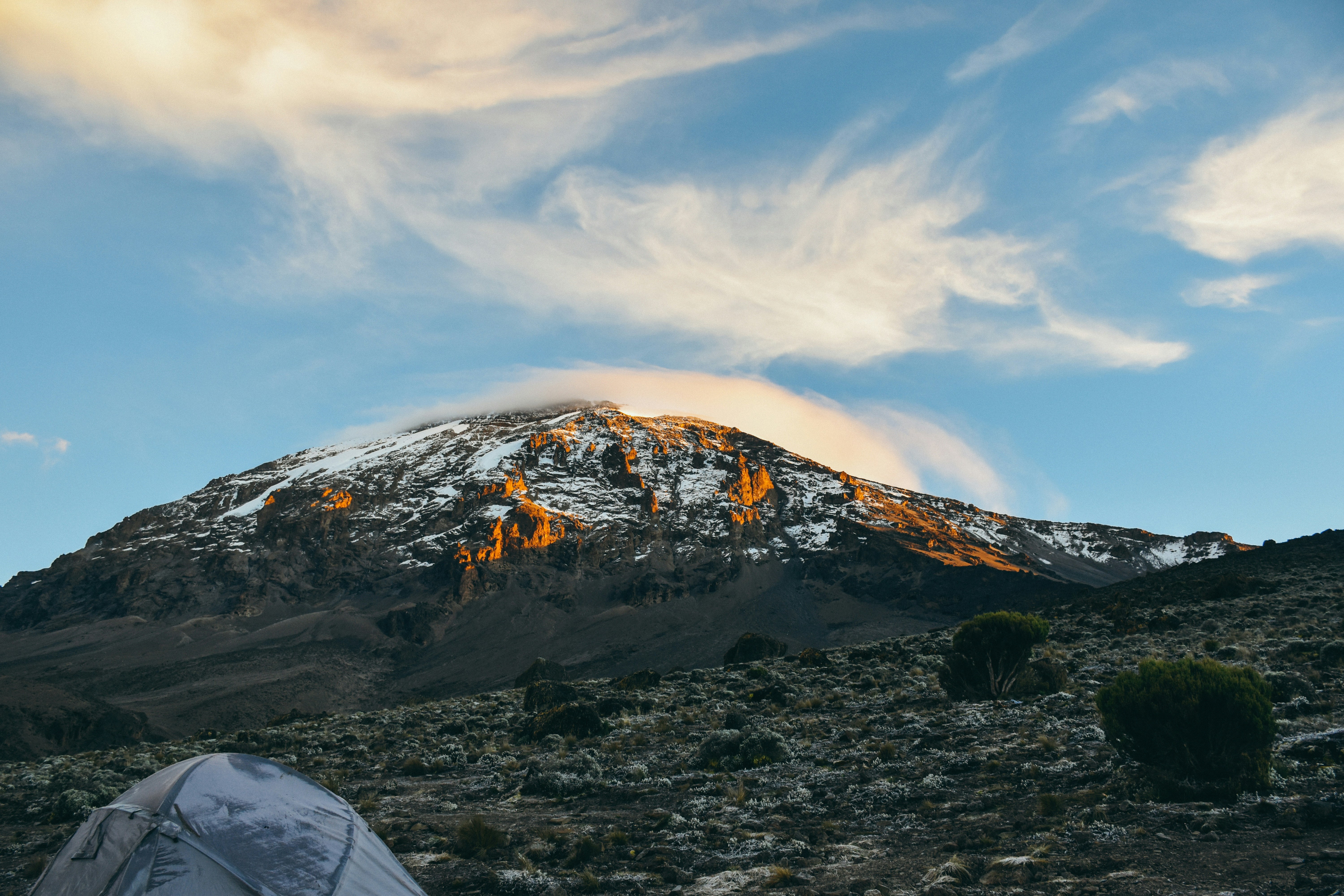
A long day. You leave the forest for heather moorland, then cross the Shira Plateau, the remains of one of Kilimanjaro's three volcanic cones, which collapsed long ago. The ground opens into grassland dotted with giant lobelias and groundsels, plants you won't see lower down. By afternoon you reach Shira 2 Camp at 3840m, with Kibo Peak rising to the east. The height gain today is significant, so let your guide set a slow pace and keep drinking. Night: Shira 2 Camp. Meals: breakfast, lunch and dinner.

Meals:Breakfast, Lunch, Dinner
Shira Plateau crossingHeather moorland zoneGiant lobelias and groundselsViews of Kibo Peak
3
Day 3

Shira 2 Camp (3840m) to Lava Tower (4630m) to Barranco Camp (3960m)

This is the key acclimatisation day of the climb, and it follows the classic pattern of climb high, sleep low. You walk up through alpine desert to Lava Tower at 4630m, where the landscape turns stark and volcanic. After a rest and time to take in the views, you descend to Barranco Camp at 3960m, which sits below the Barranco Wall. The wall is tomorrow's first job, and you'll get a good look at it from camp this evening. Night: Barranco Camp. Meals: breakfast, lunch and dinner.

Meals:Breakfast, Lunch, Dinner
Lava Tower acclimatization (4630m)Alpine desert landscapeClimb high, sleep lowBarranco Wall views
4
Day 4

Barranco Camp (3960m) to Karanga Camp (3995m)

The morning opens with the Barranco Wall, a near-vertical rock face that you climb with hands and feet. It's a scramble, not a technical climb, and your guides show you where to step. From the top there are wide views of the southern icefields. The trail then crosses several ridges before dropping into the Karanga Valley, where camp sits at 3995m, barely higher than where you slept. That's by design. Night: Karanga Camp. Meals: breakfast, lunch and dinner.

Meals:Breakfast, Lunch, Dinner
Barranco Wall scrambleSouthern icefield panoramaRidge walkingKaranga Valley camp
5
Day 5

Karanga Camp (3995m) to Barafu Camp (4673m)

Karanga is the last water point on the route. From here you climb steadily through barren alpine desert toward summit base camp, on loose volcanic scree with almost no vegetation, and you'll notice how much thinner the air has become. Barafu Camp sits on an exposed ridge at 4673m, with views of both Mawenzi and Kibo. You won't leave for the summit tonight, as tomorrow is a rest day here. Night: Barafu Camp. Meals: breakfast, lunch and dinner.

Meals:Breakfast, Lunch, Dinner
Last water point at KarangaAlpine desert ascentBarafu base campViews of Mawenzi and Kibo
6
Day 6

Rest and Acclimatisation at Barafu Camp (4673m)

A full day at high camp gives your body more time to adjust before the summit push. You take short walks around camp to stay active, then rest, drink plenty of water and eat well. Your guides brief you on the night ahead: what to wear, when you'll leave, and what the climb is like in the dark and cold. It's also the time to check your gear, from headlamp batteries to gloves, and to get to sleep early. Night: Barafu Camp. Meals: breakfast, lunch and dinner.

Meals:Breakfast, Lunch, Dinner
High-altitude acclimatizationSummit briefing from guidesRest and hydrationGear check and preparation
7
Day 7

Barafu Camp (4673m) to Uhuru Peak (5895m) to Mweka Camp (3068m)

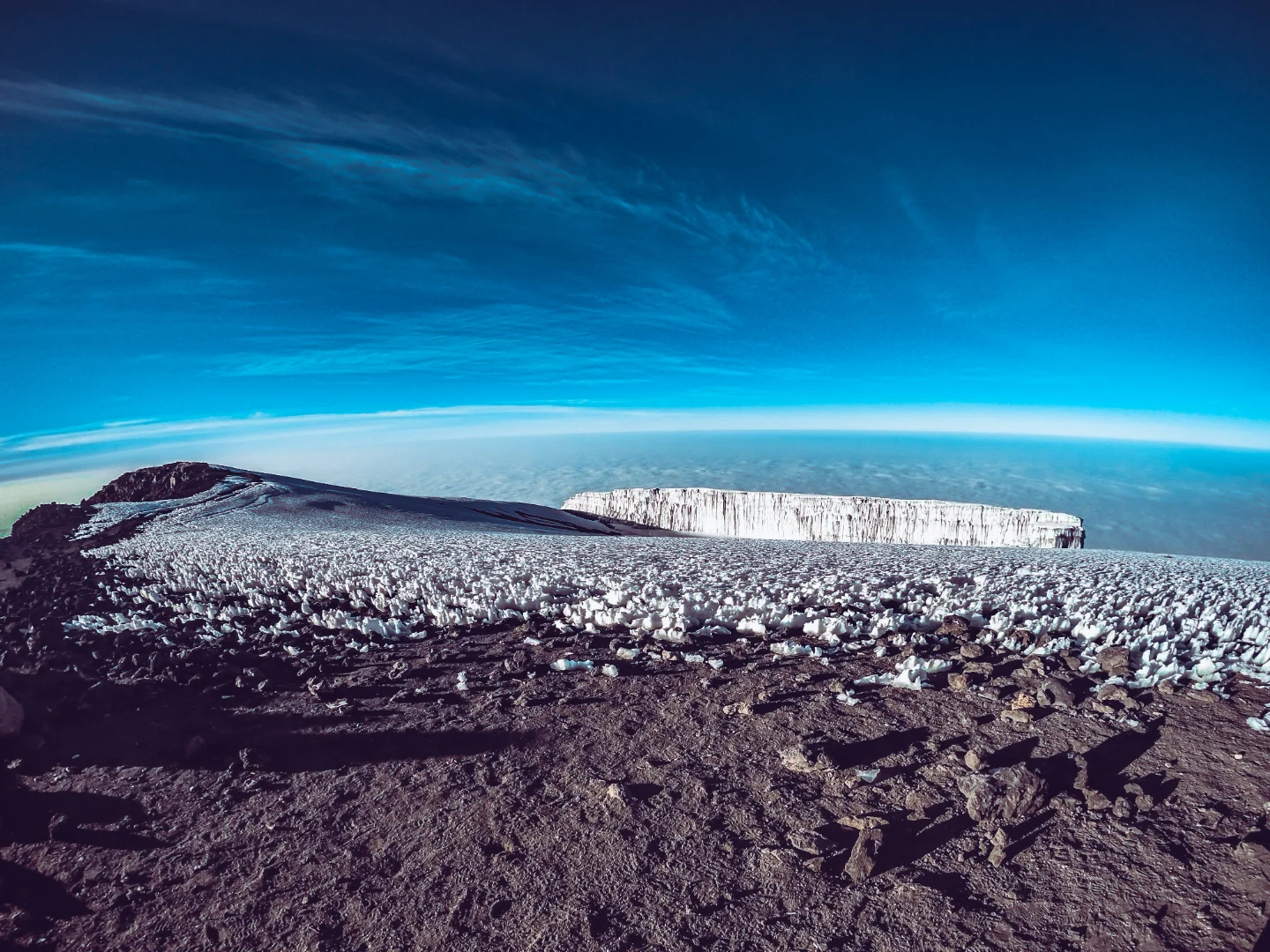
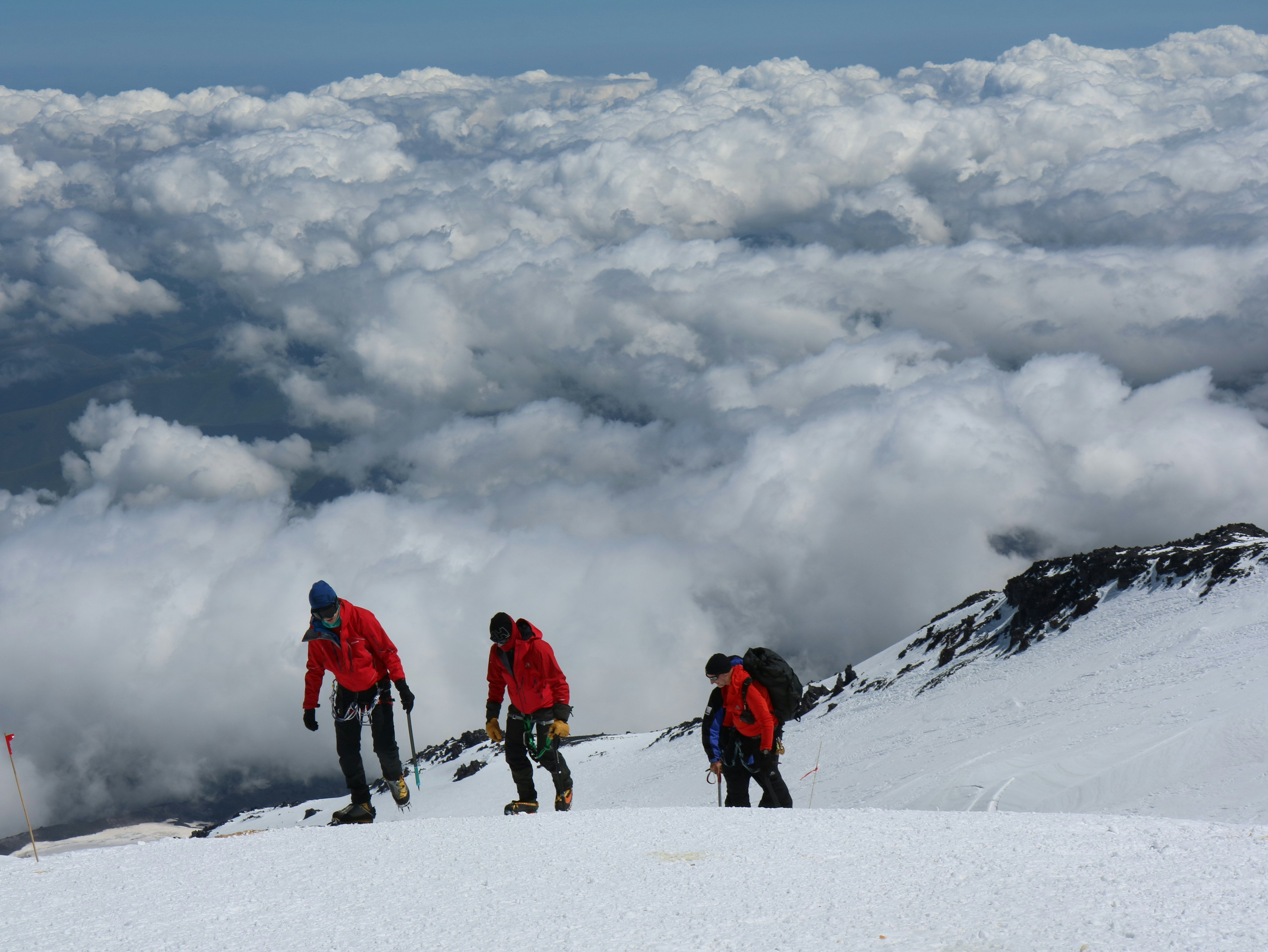
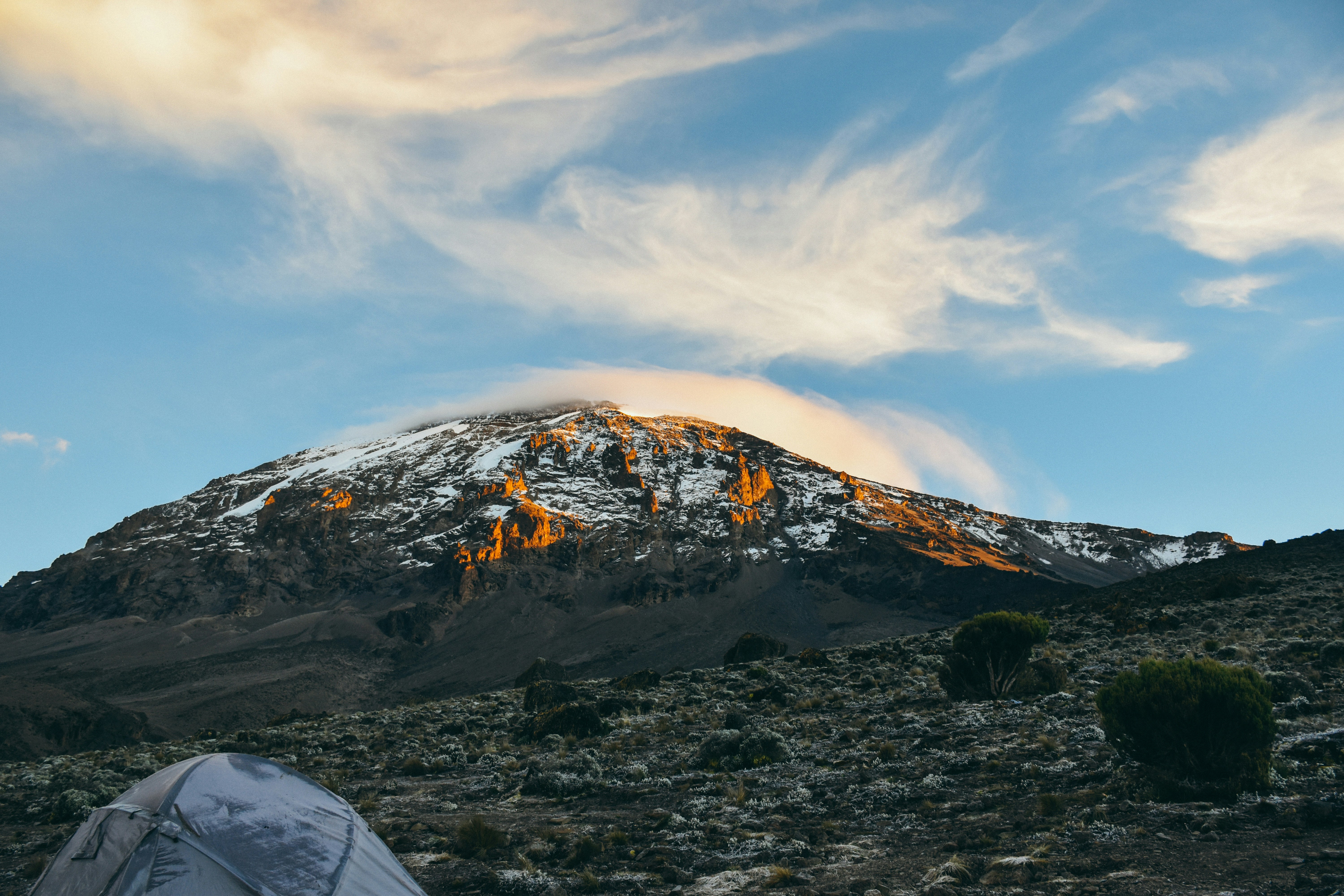
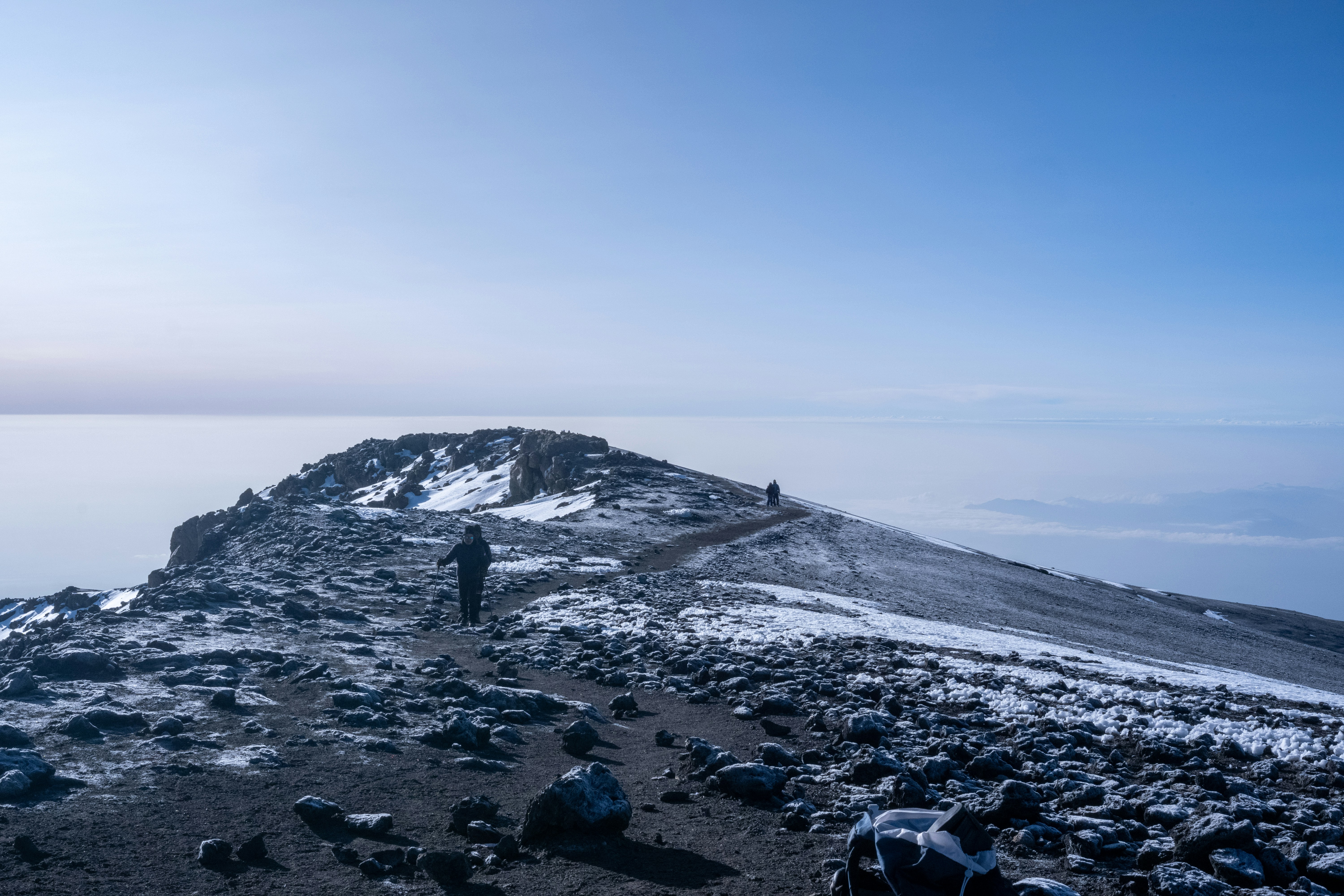
You set off around midnight, climbing by headlamp up steep switchbacks of volcanic scree. It's the longest and hardest day of the climb, and very cold before sunrise. You reach Stella Point on the crater rim as dawn breaks, then follow the rim to Uhuru Peak at 5895m, the highest point in Africa, with the glaciers in the early light. After time at the top you descend quickly to Barafu, collect your gear, and keep going down to Mweka Camp at 3068m, back near the forest. Night: Mweka Camp. Meals: breakfast, lunch and dinner.

Meals:Breakfast, Lunch, Dinner
Midnight summit pushStella Point sunriseUhuru Peak (5895m) — Roof of AfricaGlacier views at dawnDescent to forest zone
8
Day 8

Mweka Camp (3068m) to Mweka Gate (1640m)

The last morning is a walk down through rainforest, where the warmth and thicker air feel very welcome after days at altitude. It's a steady descent, so trekking poles help your knees. The porters sing as the group makes its way to Mweka Gate at 1640m. At the gate you receive your summit certificate and say goodbye to the mountain crew, then we transfer you to your hotel in Moshi. Meals: breakfast. No night on the mountain.

Meals:Breakfast
Rainforest descentSummit certificate presentationCrew farewell celebrationHotel transfer in Moshi
Safari Route Map

Route map unavailable

Contact us for detailed route information

Plan Your Safari

Dates & Pricing

Tailored quote

Designed around your journey

Tell us your dates and group size and our safari specialist will prepare a personal quote.

Departure

Contact us to discuss the best available travel dates for this safari.

What's Included

Your Safari Package

Complete Safari Package
  • Experienced mountain guides
  • Premium camping equipment
  • Professional chef and meals
  • All park fees
  • Airport transfers
  • Emergency evacuation insurance
  • Satellite communication
Not Included
  • International flights
  • Travel insurance
  • Personal mountaineering gear
  • Guide tips
  • Visa and permits
  • Personal shopping

We'll always tell you exactly what your safari covers before you pay. Need help with flights, visas, or insurance? Just ask — we arrange it all.

Safari Value Summary
Total Inclusions
7 Items
Meals Included
21 Meals
Accommodation
7 Nights
Game Drives
12+ Drives
Safari Days
8 Days
All-Inclusive Experience

Our safari package includes everything you need for an unforgettable adventure. No hidden costs or surprise charges.

Prefer it tailor-made? Design your safari
Independent Reviews

What Travellers Say About Us

Reviews of our safaris on independent platforms, from guests who travelled with our Arusha team.

Good to Know

8-Day Lemosho Route Climb: Frequently Asked Questions

How does acclimatisation work on the 8-day Lemosho Route?

The route gains height gradually and uses climb high, sleep low. On day three you walk up to Lava Tower at 4630m, then sleep lower at Barranco Camp at 3960m. Day six is a full rest day at Barafu Camp (4673m) before the summit, giving your body more time to adjust. That extra time is the main reason we suggest this route to first-time climbers.

What is summit night like on the Lemosho Route?

You leave Barafu Camp around midnight and climb by headlamp up steep switchbacks on volcanic scree. You reach Stella Point on the crater rim around dawn, then follow the rim to Uhuru Peak at 5895m. After the summit you descend to Barafu, collect your gear and continue to Mweka Camp at 3068m. It's the longest and hardest day, and very cold before sunrise.

What are the camps and altitudes on the Lemosho Route?

You sleep at Mti Mkubwa Camp (2895m), Shira 2 Camp (3840m), Barranco Camp (3960m), Karanga Camp (3995m) and Barafu Camp (4673m), where you spend two nights. After Uhuru Peak (5895m) you sleep at Mweka Camp (3068m) before walking out to Mweka Gate (1640m). Day three also takes you up to Lava Tower at 4630m.

Is the Barranco Wall dangerous?

It's a scramble, not a technical climb. On day four you use hands and feet on a near-vertical rock face above Barranco Camp, and your guides show you where to step. It looks intimidating from below, but most people find it more exciting than frightening, and the views of the southern icefields from the top are a good reward.

Do I need climbing experience for the Lemosho Route?

No technical experience, but you do need good fitness. Most days are six to eight hours of walking, and the altitude makes every step harder near the top. Porters carry the equipment, so you only carry a daypack. Regular hill walking and a few long hikes in the months before you come are the best preparation.

Where does the Lemosho climb start and finish?

It starts at Londorossi Gate on the remote western side of Kilimanjaro, reached by a drive along the mountain's western flank. It finishes at Mweka Gate (1640m) after a final morning walk down through rainforest. There you receive your summit certificate and say goodbye to the crew before we transfer you to your hotel in Moshi.

Why choose Lemosho over a shorter Kilimanjaro route?

Time and quiet. Lemosho starts on the less crowded western side, crosses the Shira Plateau, and builds in both the Lava Tower acclimatisation walk and a rest day at Barafu. That gives your body more days to adjust than a shorter climb. It suits first-time climbers who want a fair chance at the summit and want to enjoy the mountain on the way up.

When is the best time to climb Kilimanjaro on the Lemosho Route?

There are no fixed departure dates listed, so ask us. As a general guide, the drier months are the most popular, from about late June to October and again from around January to early March. The long rains, roughly April and May, make the trails wet and muddy. Our Arusha team can help you choose dates.

What should I pack for the Lemosho climb?

Layers for everything from warm, humid forest to well below freezing on summit night. Bring broken-in waterproof boots, thermal base layers, a fleece, an insulated down jacket, a waterproof shell, warm gloves and a hat, a headlamp with spare batteries, a daypack and trekking poles. Most visitors also need a Tanzanian tourist visa, through the official eVisa portal or on arrival.

How long is the 8-Day Lemosho Route Climb?

The 8-Day Lemosho Route Climb is 8 days and 7 nights. The day-by-day itinerary on this page shows where you go and stay each day.

Which parks and places does the 8-Day Lemosho Route Climb visit?

This trip visits Mount Kilimanjaro.

How difficult is the 8-Day Lemosho Route Climb?

It is rated challenging: good fitness is recommended.

What is the group size on the 8-Day Lemosho Route Climb?

It runs for groups of 2 to 10 travellers.

What is included in the 8-Day Lemosho Route Climb?

Included: Experienced mountain guides, Premium camping equipment, Professional chef and meals, All park fees, Airport transfers, Emergency evacuation insurance and Satellite communication.

What is not included in the 8-Day Lemosho Route Climb?

Not included: International flights, Travel insurance, Personal mountaineering gear, Guide tips, Visa and permits and Personal shopping.

Your safari is waiting

Join thousands of travelers who have experienced the magic of Africa's wildlife with us.