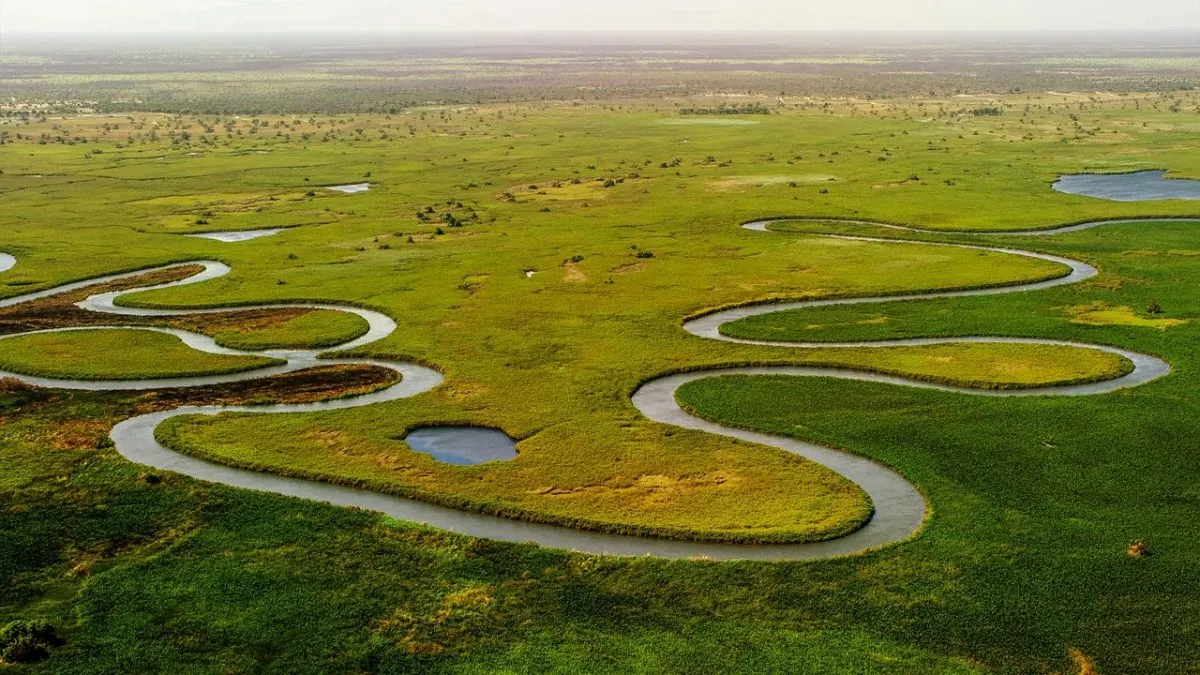
Okavango water safaris against the migration and the crater: who each country suits, what each costs, and when to go.
Botswana and Tanzania are the two names that come up once a traveler decides against the self-drive South African route and wants the big, wild version of Africa. They deliver it in opposite ways: Botswana is a water wilderness run on a deliberately low-volume, high-cost model; Tanzania is the great land migration with a safari industry that works at every budget. We are a Tanzanian operator, so read this with that declared, but the comparison below is the one we give travelers who ask us straight, including the cases where Botswana is the better answer.
The Short Answer
Choose Tanzania for the Great Migration, the Ngorongoro Crater, the Big Five in one itinerary, a beach finish on Zanzibar, and the freedom to do it at budget, mid-range or luxury level. Choose Botswana for the Okavango Delta's water-based safari — mokoro canoes, island camps, walking — with very few other vehicles and a price of entry to match. Tanzania is the broader first safari; Botswana is the specialist's second one, or the first safari of a traveler whose budget starts where most end.
Side by Side
| Tanzania | Botswana | |
|---|---|---|
| Signature experience | The Great Migration: ~1.5 million wildebeest on a 1,000 km annual circuit | The Okavango Delta: a UNESCO-listed inland delta explored by boat and mokoro |
| Flagship parks | Serengeti (14,763 km²), Ngorongoro Crater, Tarangire | Okavango/Moremi, Chobe, the Kalahari |
| Safari style | Classic 4x4 game drives; walking and night drives on concessions | Mixed: game drives plus boats, mokoro and walking as standard |
| Tourism model | Full range — camping to ultra-luxury | Deliberately low-volume, high-cost; small fly-in camps dominate |
| Budget entry | Camping safaris from $250/day | Realistic budget options are scarce by design |
| Crowds at sightings | Busy at famous spots in peak season; quiet in the south and west | Famously low vehicle density almost everywhere |
| Add-on | Zanzibar beaches, Kilimanjaro | Victoria Falls (just across the border) |
Wildlife: Spectacle vs Setting
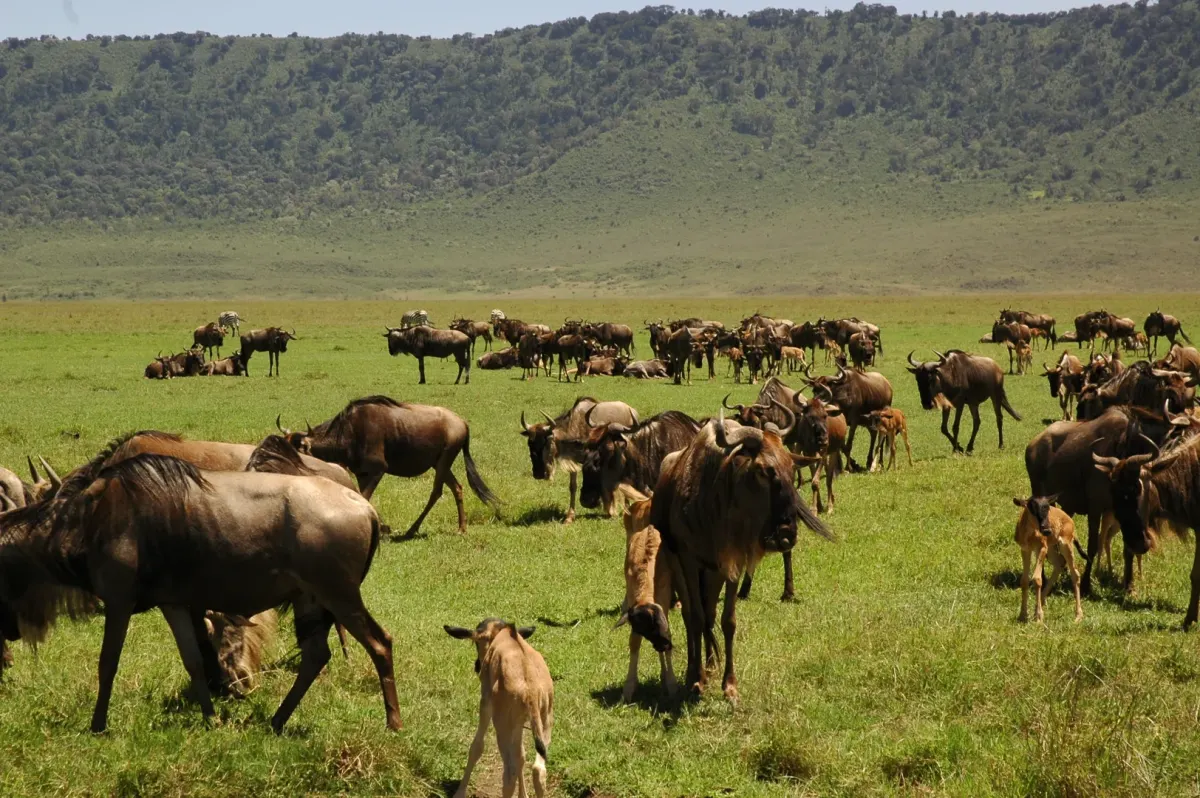
Tanzania's case is the sheer scale of events. The migration (around 1.5 million wildebeest with 400,000 zebra) rolls through the Serengeti all year, from a calving season that produces roughly 8,000 calves a day at its peak to the Mara River crossings of the northern dry season. A day in the Ngorongoro Crater adds the most reliable black rhino viewing in East Africa and a realistic shot at the Big Five before lunch. The migration calendar gives the month-by-month picture.
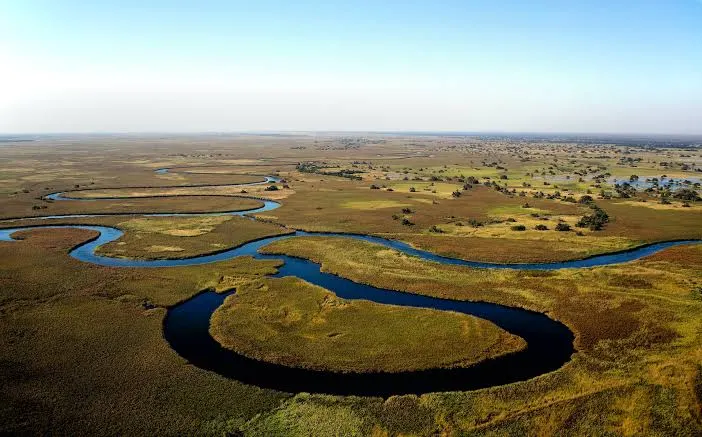
Botswana's case is the setting. The Okavango floods an arm of the Kalahari into a maze of channels and islands, and the game viewing happens from boats and mokoro as much as from vehicles: elephants crossing channels, hippos at eye level, leopards in the riverine forest of Moremi. Chobe is famous for elephant herds on a scale few places match. What Botswana does not offer is a migration-scale event or Ngorongoro's one-day Big Five density — its brilliance is quieter and closer.
Cost and the Shape of the Industry
This is the practical difference that decides most bookings. Botswana made a strategic choice decades ago: few visitors paying a lot, mostly flying between small remote camps. It keeps the wilderness empty and puts most of the country's best areas beyond mid-range budgets.
Tanzania runs the full ladder. Our own range makes the point: camping safaris from $250 a day, mid-range lodge safaris from $450, luxury from $850 to $1,500-plus. A typical 7-day mid-range trip lands at $3,150–5,600 per person. A traveler can see the migration properly at any of those tiers; the line-by-line arithmetic is in our cost breakdown, and the top of the market in our luxury safari guide. At the luxury tier the two countries converge: a private-concession Serengeti camp and an Okavango camp compete directly, and both are superb.
When to Go
Both run on a dry-season rhythm. Tanzania's headline months are June to October for the dry season and river crossings, with January to March for calving in the south, though the migration makes some region of the Serengeti worthwhile in every month. Botswana's peak is also the dry winter, when the Okavango flood (which arrives from Angolan rains months earlier) peaks just as the surrounding country dries out, concentrating wildlife on the water. Green-season travel is the budget play in both countries, with the same trade-off of rain and longer grass.
Who Should Pick Which
- First safari, broad appetite: Tanzania. More variety per day, the crater's guaranteed density, and an itinerary that scales to your budget rather than dictating it.
- The migration is the dream: Tanzania, where the herds spend most of the year. Time it with the calendar, not luck.
- You want water, silence and walking: Botswana. Nothing in East Africa replicates a mokoro gliding through the delta at dawn.
- Honeymoon with a beach: Tanzania. The safari-to-Zanzibar flight joins the two halves into a single booking.
- Second safari, done the classics: Botswana is the natural next chapter; it will feel like a different continent in the best way.
- Families and groups: Tanzania, where private vehicles, flexible lodges and road-based circuits suit mixed ages far better than fly-in camps with minimum-age rules.
Can You Combine Them?
Not sensibly in one trip — they are far apart, on separate flight networks, and each deserves its own full itinerary. The combinations that do work are within each region: Tanzania pairs with Kenya, Zanzibar or Kilimanjaro; Botswana pairs with Victoria Falls and Namibia. We run the East African side only, and that honesty cuts both ways: if your heart is set on the Okavango, book Botswana with a Botswana specialist, and when the migration calls you back, our tours are here.
For the same comparison against South Africa's flagship park, see our Kruger vs Serengeti guide.
Frequently Asked Questions
Is Botswana more expensive than Tanzania?
At the levels most travelers book, yes — Botswana's model is built around high-end fly-in camps, while Tanzania offers real quality from camping upward. At the luxury tier the prices overlap and the choice becomes one of style: land and spectacle versus water and seclusion.
Which is better for the Big Five?
Tanzania, mainly because of Ngorongoro: the crater's open floor and guarded rhino population make the full set achievable in a single day, something no Botswana itinerary can promise. Botswana compensates with elephant numbers in Chobe and superb leopard viewing in Moremi.
Which is less crowded?
Botswana, by design: low-volume tourism is its national policy. Tanzania's famous sightings can draw vehicles in peak season, but its quiet corners (the south, the west, the green-season Serengeti) offer solitude without the Botswana price tag.
Is Tanzania good enough for a repeat safari-goer?
Easily. The Serengeti alone has four distinct regions that most first trips never touch, and the southern parks see a fraction of the northern circuit's visitors. A second Tanzanian safari can be as different from the first as Botswana would be.
Weighing the two? Tell us what you want from the trip — if Tanzania fits, we'll build it; if Botswana genuinely suits you better, we'll say so.

Ecological Wilderness Adventure
Expert safari guide and writer at Ecological Wilderness Adventure, a TATO-licensed operator based in Arusha, Tanzania with 20+ years of experience crafting authentic wildlife expeditions across East Africa.
Published November 17, 2026
You Might Also Enjoy
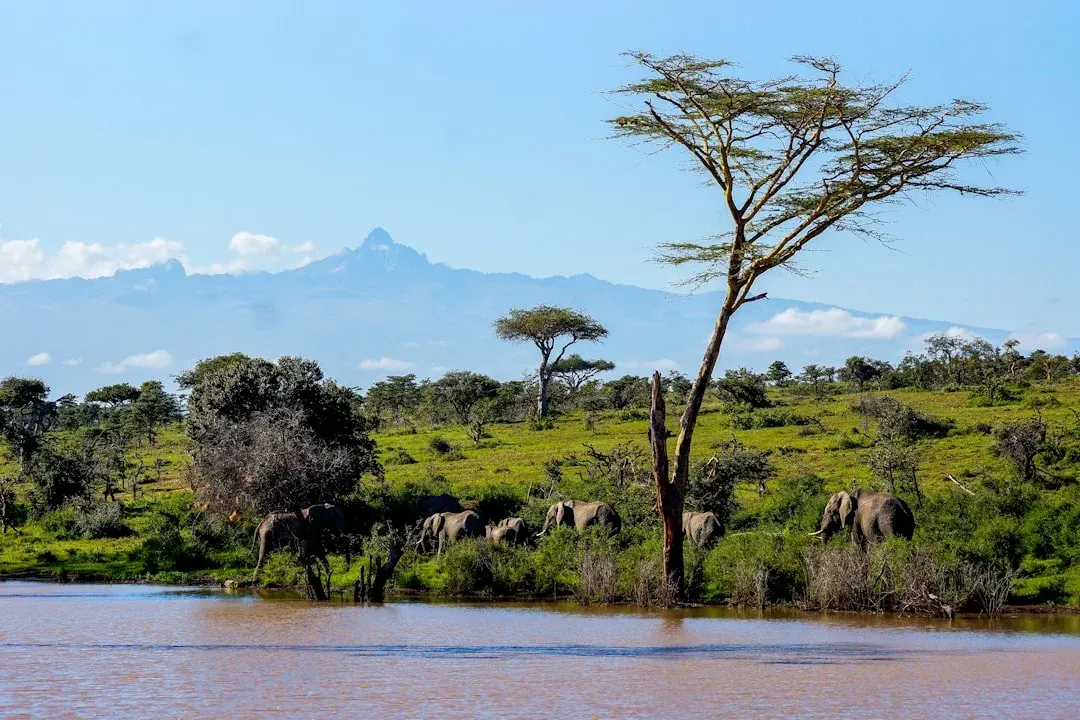
Kenya Safari from Tanzania: Combining Both Countries in One Trip
What Kenya adds to a Tanzania safari, how the border crossing works, and the itineraries that cover both sides of the Mara River.
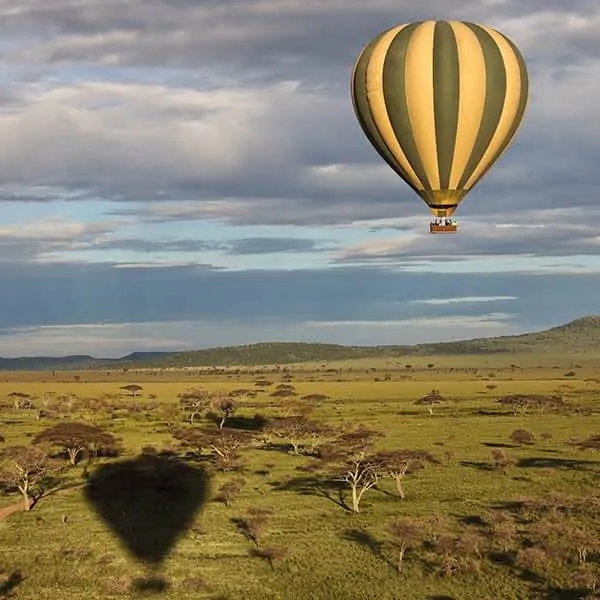
Tanzania Safari & Zanzibar Beach: The 10-Day Itinerary
Six days on safari, four on Zanzibar: the day-by-day plan, costs by tier, and where to stay on the island.
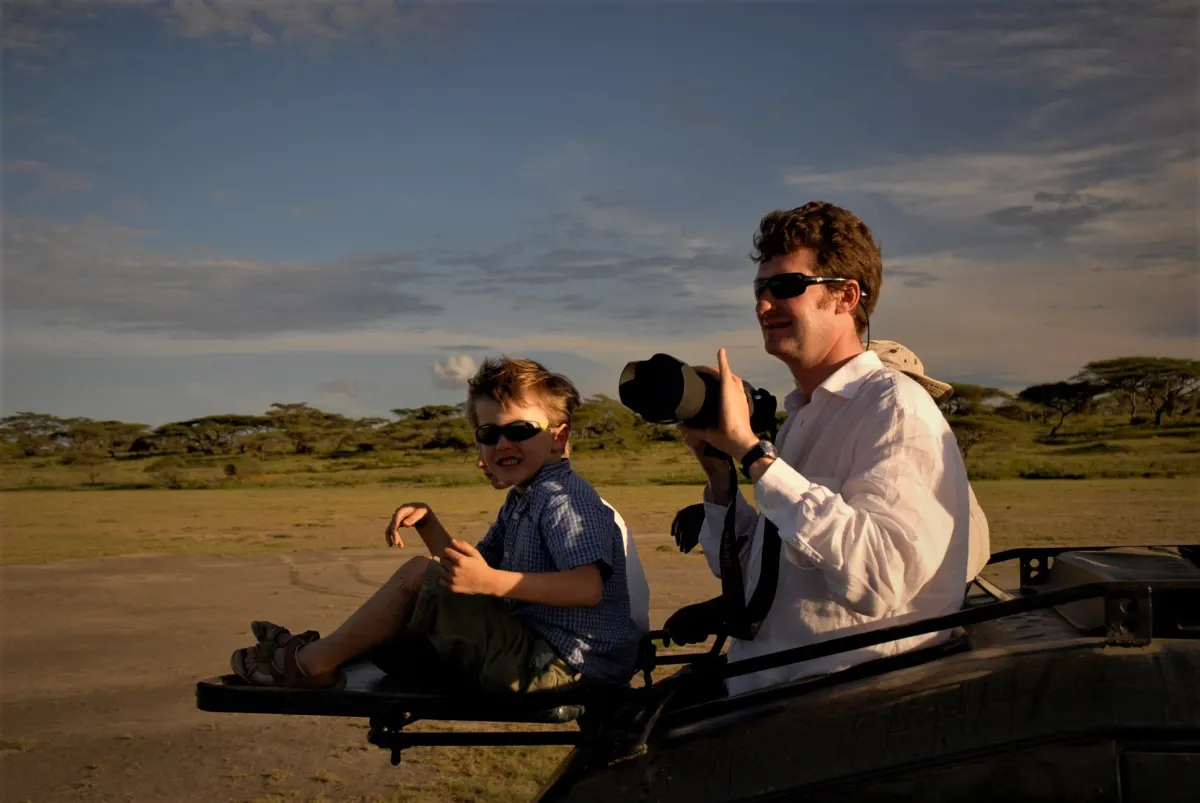
Best Time for an African Safari: Month-by-Month Guide
When to go on an African safari: dry season, migration, calving and green season months for Tanzania, Kenya, Uganda and Rwanda.