The crater-rim classic reviewed honestly: rooms, access, rates from $400 a night, and how to build the crater day around it.
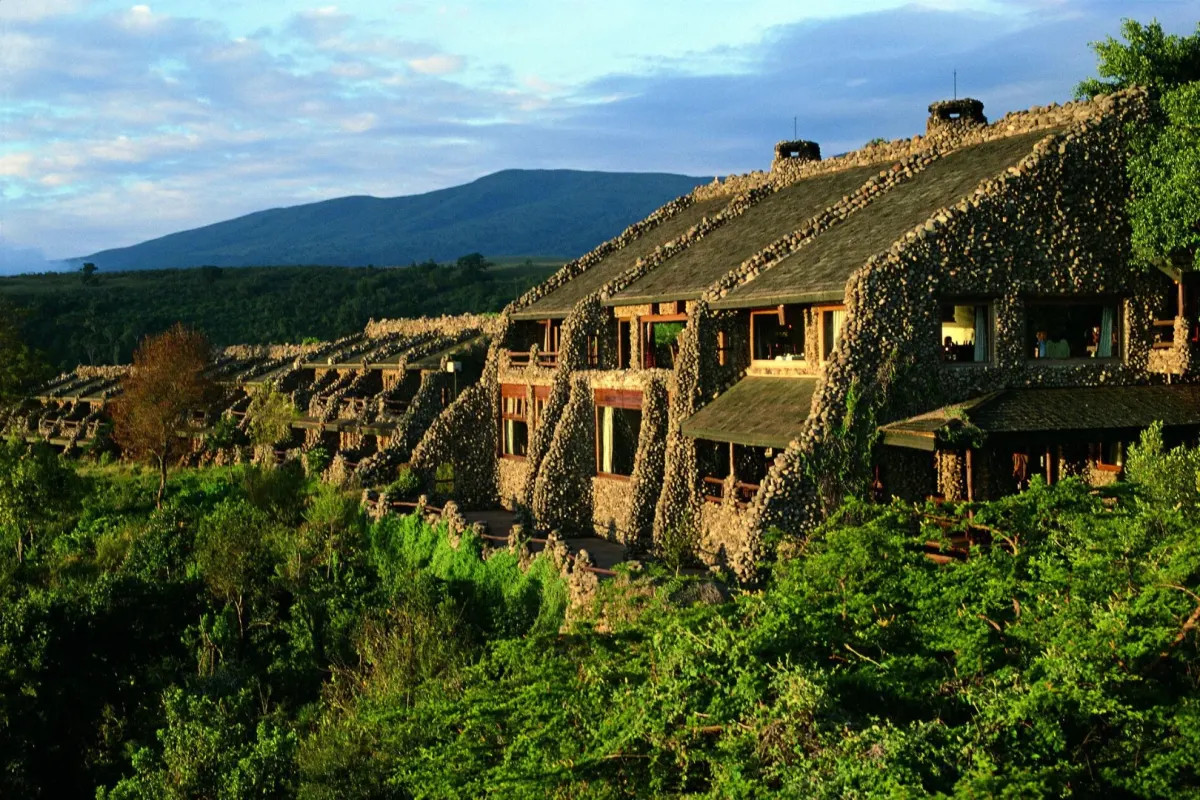
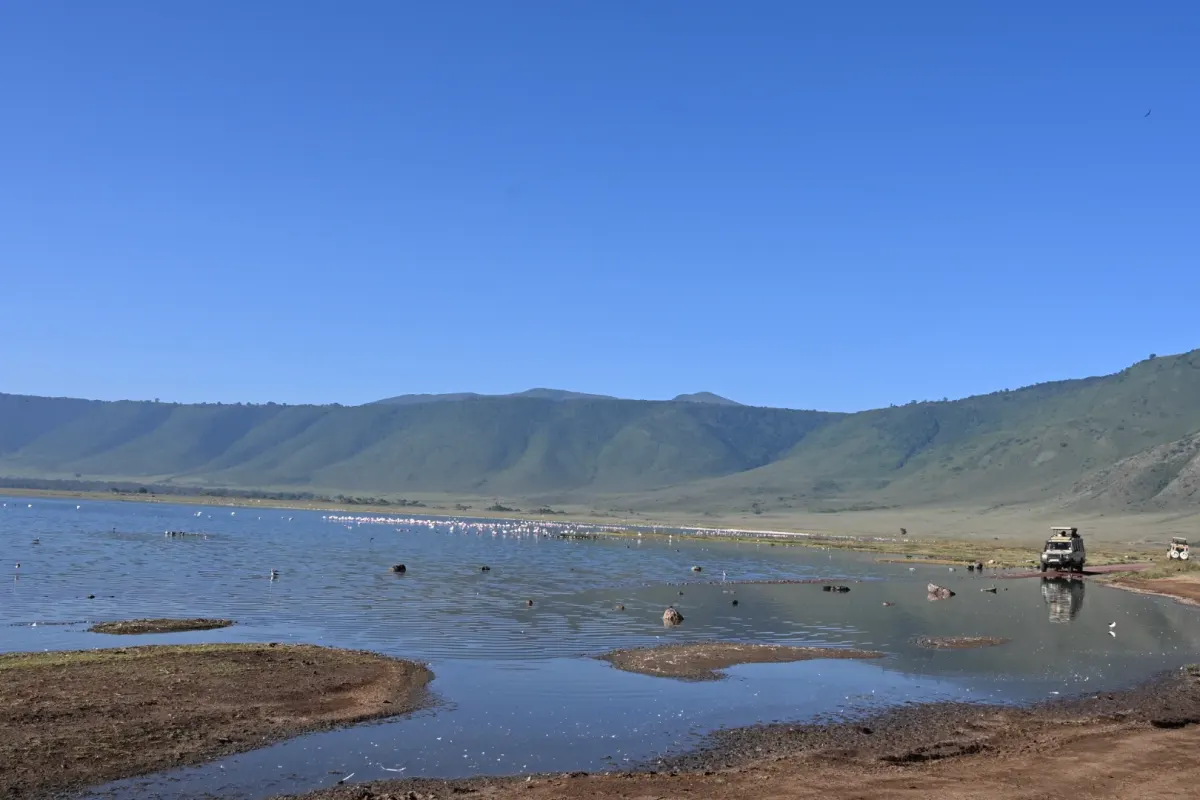
Ngorongoro Serena Safari Lodge sits on the western rim of the Ngorongoro Crater at 2,286 meters, built from local river stone and half-hidden under indigenous vines, with the caldera floor 600 meters below its windows. It is one of the most requested lodges we book, partly for the location and partly for the price: rates start around $400 a night, which on the crater rim counts as value. This guide covers the rooms, the access, what a stay is actually like, and how to build a safari around it — with the honest notes a brochure leaves out.
Why This Lodge
Crater-rim real estate is the scarcest in Tanzania: a short list of properties shares the edge of the world's largest intact caldera, and everything else sleeps an hour or more from the descent road. The Serena earns its place on that list twice over. The architecture — low rondavel-style buildings of river stone, draped in creepers — disappears into the rim rather than standing on it. And the position on the western rim puts you close to the morning descent, which matters more than any amenity: the crater floor belongs to whoever reaches it first.
The trade-off to know in advance: this is a 75-room lodge, not an eight-tent camp. Evenings are sociable, the dining room is a dining room, and in high season the lodge runs full. If you want solitude on the rim, that is a different product at a different price — see the alternatives at the end.
Location and Access
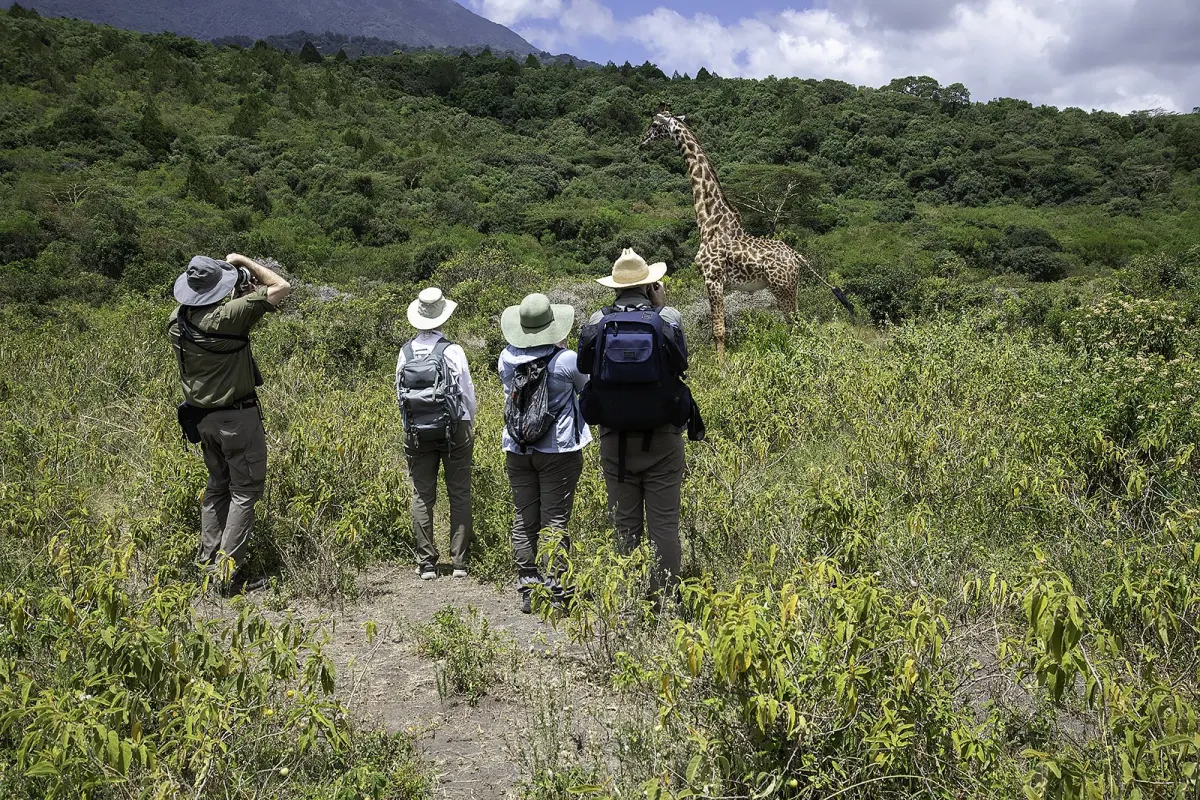
The lodge stands inside the Ngorongoro Conservation Area, a UNESCO World Heritage Site where Maasai communities still live and graze cattle alongside the wildlife.
- From Arusha: a 4–5 hour drive, about 190 km, entering at Lodoare Gate.
- From the Serengeti: 3–4 hours via Naabi Hill Gate — which is why the two pair so naturally on one itinerary.
- By air: charter flights to the Lake Manyara or Ngorongoro airstrips, then about an hour by road.
Rooms
All 75 rooms carry the same stone-and-timber character; the booking decision is the view.
| Room type | View | Size | Features |
|---|---|---|---|
| Standard Room | Forest | 32 m² | Twin or king, en-suite bathroom |
| Crater View Room | Crater | 32 m² | Panoramic caldera views, private balcony |
| Suite | Crater | 48 m² | Separate lounge, premium amenities |
Every room has a fireplace — not decoration at 2,286 meters, where nights drop to 5–10°C — plus 24-hour hot water and electricity, tea and coffee things, a safe and Wi-Fi. Our standing advice: pay the difference for the crater view. Sunrise over the caldera, with wildlife visible on the floor through binoculars, is the reason you came this far.
The Crater Below
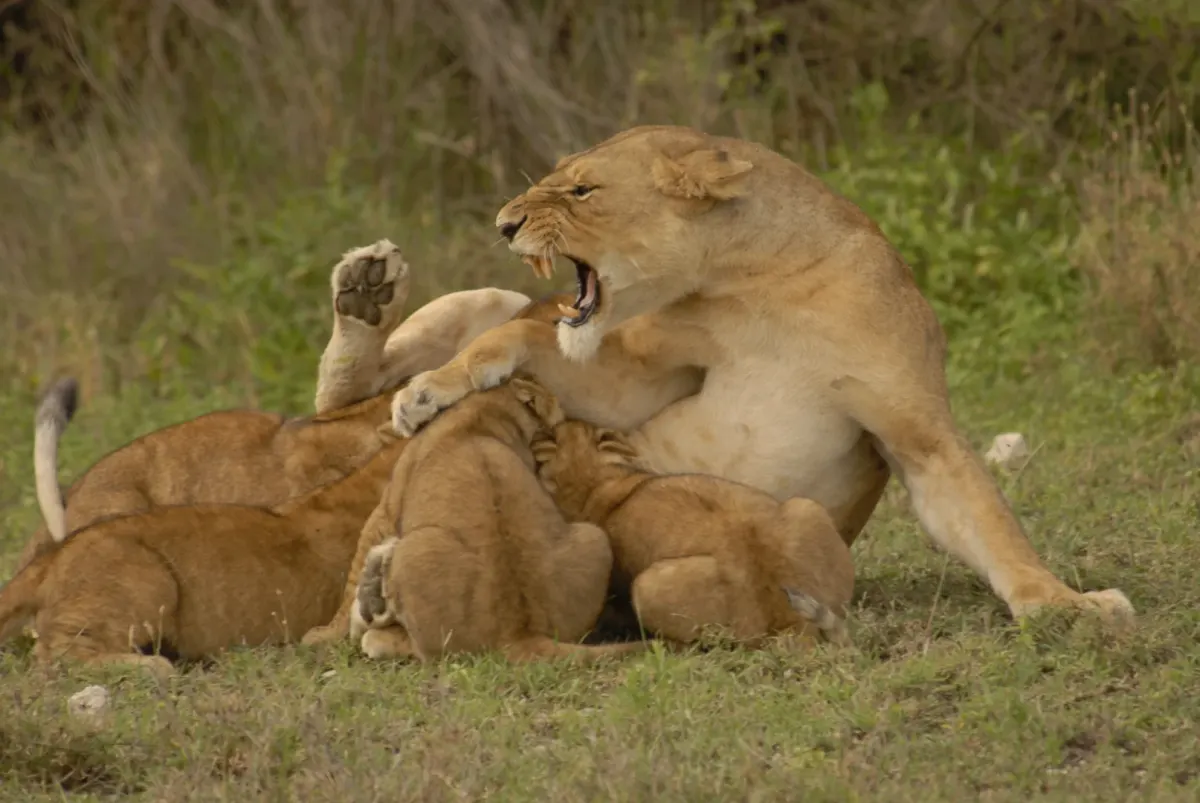
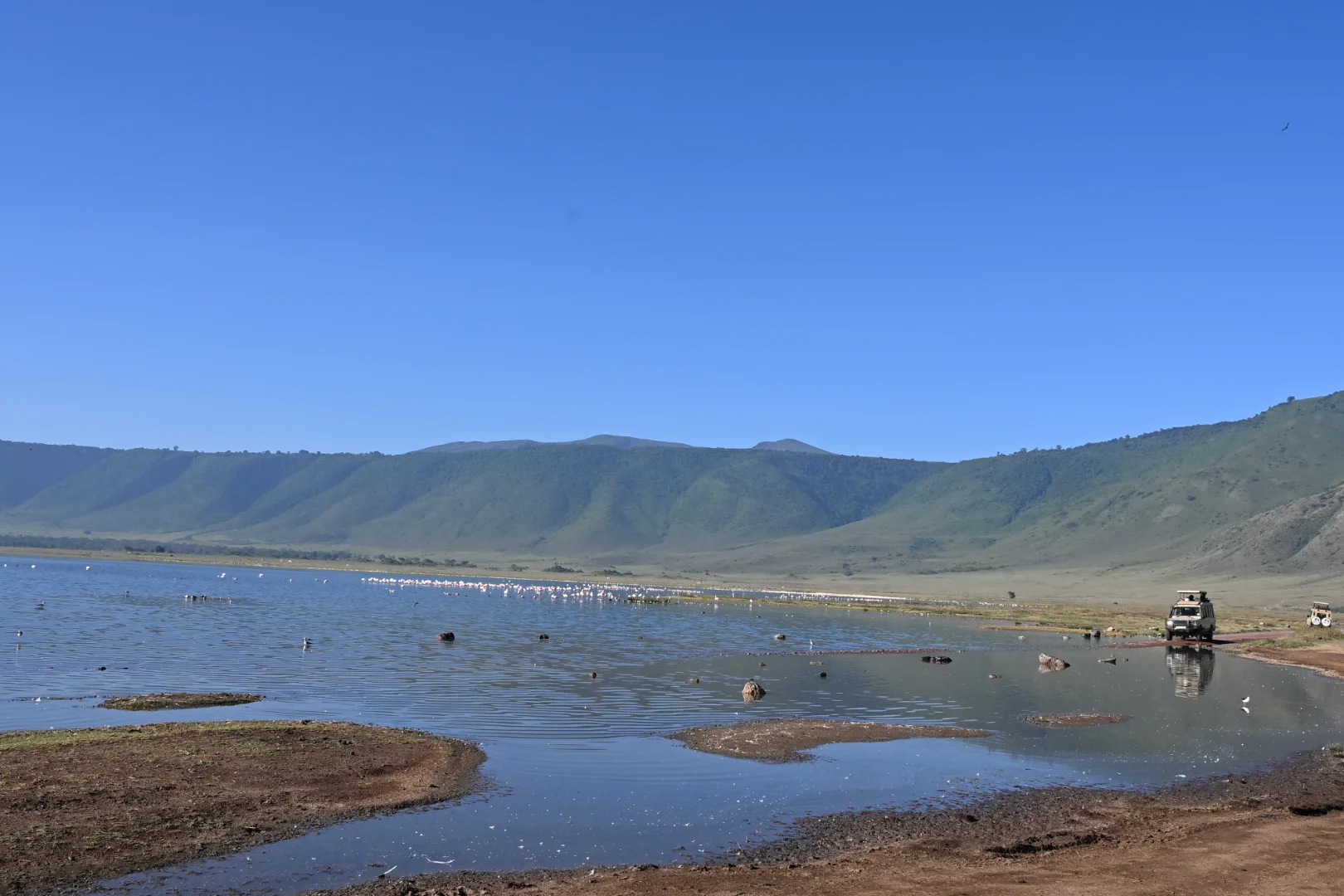
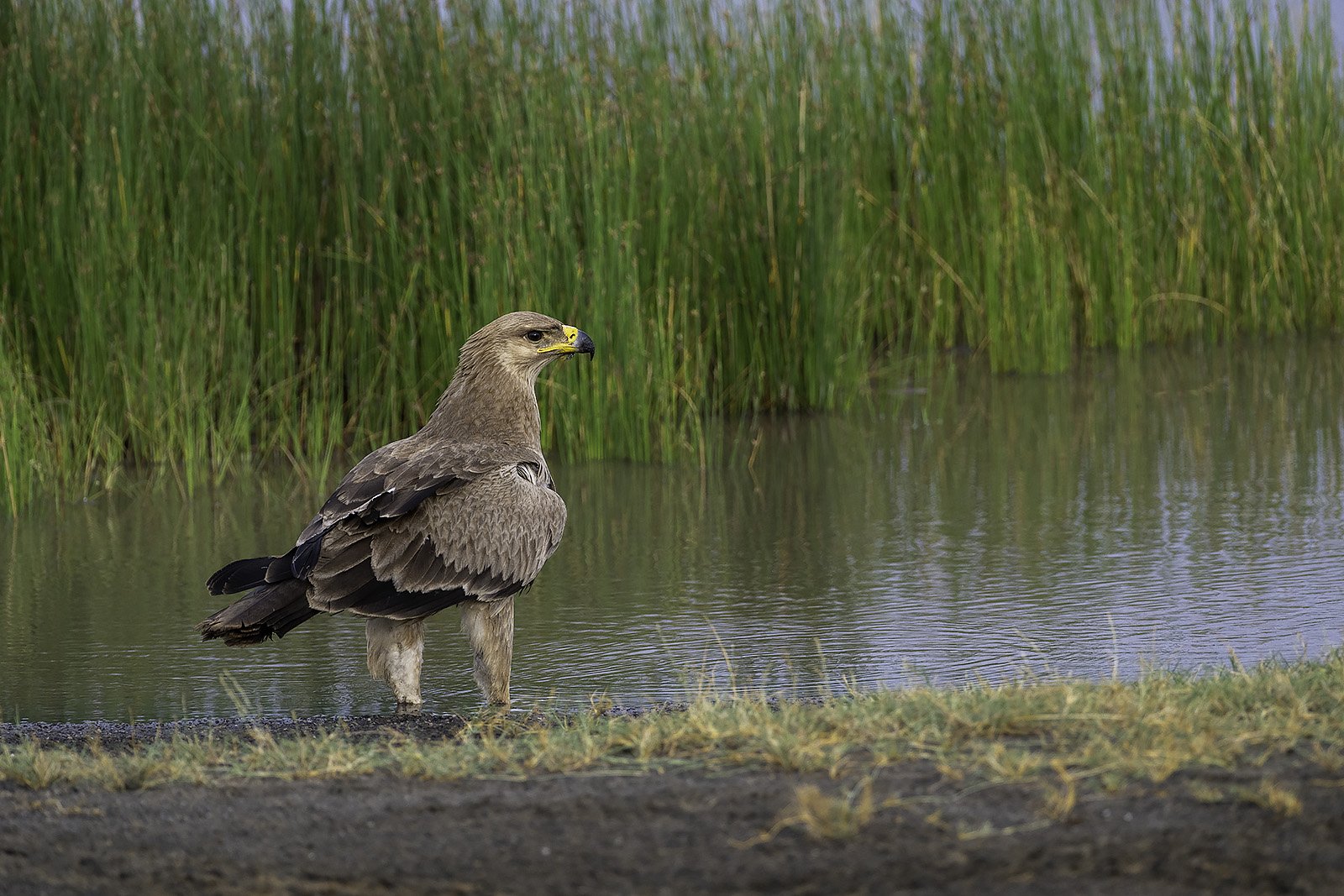
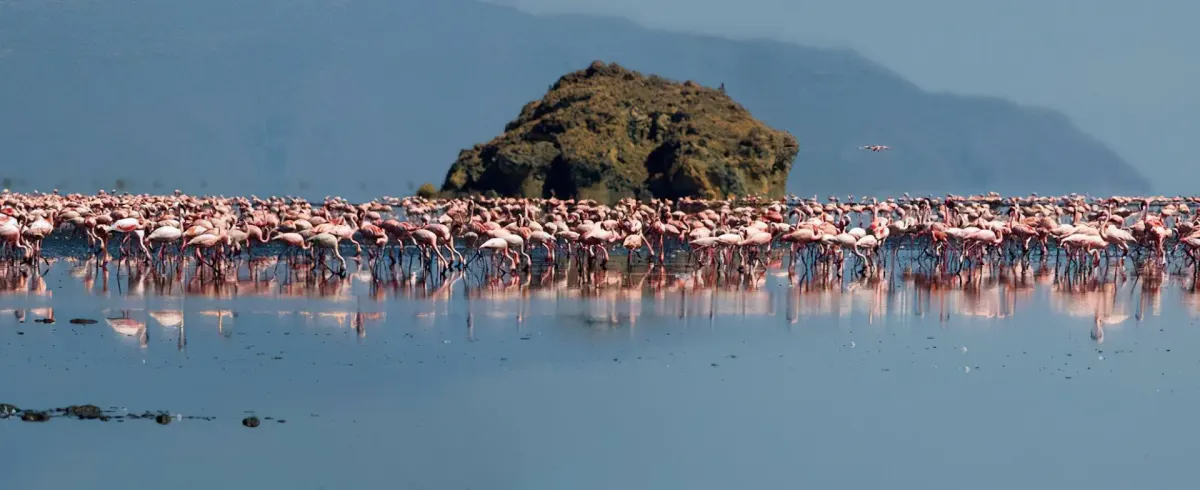
The floor you look down on holds roughly 25,000 large animals in 260 km²: resident lions, elephant bulls with some of the heaviest tusks left in Africa, buffalo and hyena in numbers, flamingos on Lake Magadi, and the black rhino that make the crater the most reliable place in Tanzania to complete the Big Five. More than 500 bird species have been recorded in the area. The full picture — what lives where on the floor, fees, and how a crater day runs — is in our Ngorongoro Crater guide.
Building a Safari Around the Lodge
The pattern that works: arrive in the afternoon, sleep on the rim, and be at the descent road when it opens. The first hours on the floor are the quietest and the most productive. Two nights at the lodge with one full crater day is the standard, and combining it with the Serengeti is nearly automatic given the road runs onward to Naabi Hill — most guests pair two nights here with two or three at Serengeti Serena Safari Lodge.
Itineraries of ours that stay here or can: the 6-day Ngorongoro & Serengeti Express, the 7-day Classic Northern Circuit, and for travelers short on time, the 3-day Crater Escape.
Best Time to Stay
| Season | Months | What you get |
|---|---|---|
| Dry season | June–October | Easiest wildlife viewing, clear skies, busiest crater |
| Green season | November–May | Lush landscapes, newborn animals, fewer vehicles, lower rates |
| Calving season | January–February | Wildebeest calving on and around the crater floor |
The crater itself works year-round — its walls hold water and wildlife through every season — so the lodge is one of the few Tanzanian bookings where the month matters less than the room category.
Rates and Booking
Rates start around $400 per night; crater-view rooms and suites price above that, and high-season dates go first. Current rates and photos are on our Ngorongoro Serena Safari Lodge accommodation page, and on a packaged safari the lodge is costed into the tour price with park fees and game drives.
If the Serena Isn't the Fit
On or near the rim: Ngorongoro Sopa Lodge on the quieter eastern side with its own descent road, Entamanu Ngorongoro for the small-camp exclusive version, Ngorongoro Lodge, Meliá Collection for contemporary polish, and Lemala Ngorongoro Tented Camp near the Lemala descent road. Down in Karatu, 45 minutes from the gate, Gibb's Farm trades the rim view for a working coffee farm, and Marera Valley Lodge (from $100 a night) is the budget play that keeps you within morning range of the crater.
Frequently Asked Questions
Is Ngorongoro Serena Safari Lodge inside the crater?
No. It stands on the rim, about 600 meters above the floor. No permanent structures are allowed inside the crater; every lodge "in Ngorongoro" is on the rim or the outer slopes.
How cold does it get at the lodge?
Nights run 5–10°C at this altitude in any month. Every room has a fireplace and heavy blankets; pack real layers and a warm jacket for the morning drive, when the open descent road is at its coldest.
Can I combine the lodge with the Serengeti?
Yes, and most itineraries do: two nights here, then onward through Naabi Hill Gate to the Serengeti, 3–4 hours away.
Is the crater-view room worth the extra cost?
In our experience, yes — it is the single upgrade guests mention afterward. The standard rooms face the forest; the view rooms face the reason you booked.
Want the Serena on your itinerary? Send us your dates and we'll confirm availability and build the crater day around an early descent.

Ecological Wilderness Adventure
Expert safari guide and writer at Ecological Wilderness Adventure, a TATO-licensed operator based in Arusha, Tanzania with 20+ years of experience crafting authentic wildlife expeditions across East Africa.
Published April 2, 2026